Thursday, November 16, 2023

The Bountiful Whitney

Artist Henry Taylor, the youngest of eight children in a California family, portrays himself as Henry VIII, a sly allusion to the erasure of Africans from European art that usually depicted royalty or the landed gentry.

Untitled (2021)
In this atypical work, it looks as if Taylor is paying tribute to his mother Cora.  But it also could be read as a menu of threats facing their community:  the shape of her name looks like a gun; the Brer Rabbit syrup reflects racist stereotypes; salt may contribute to significantly higher rates of blood pressure among blacks than whites; and the kitchen may symbolize the prison of domesticity for women.

"Cora, (cornbread)" (2008)
Taylor, who earned his artistic chops sketching patients at a mental institution where he was employed as a psychiatric technician, has been painting portraits, mostly from memory, for three decades.  Here he freezes a horrific moment in time, when a Minnesota police officer shot and killed Philando Castile during a routine traffic stop.  Afterward, his girlfriend--and mother of his four-year-old daughter, also in the car--streamed the incident live on Facebook.  A jury eventually acquitted the police officer of second-degree manslaughter but the white hand aiming a gun at a black body indicts systemic racism for all time.
 
"THE TIMES THAY AINT A CHANGING, FAST ENOUGH!"  (2017)
Looking at this large canvas, it's hard not to think of the crop dusters that jealous white supremacists in Oklahoma used to fire on the well-to-do residents of black Wall Street in the early 20th century.

Untitled (2022)
A peace sign and gun offer an irresistible juxtaposition, probably observed rather than imagined.

"Girl with a Toy Rifle" (2015)
Brotherhood and ubiquitous police patrols are facts of life in African American communities but it's hard to parse the meaning of the low-flying jet liner.

Untitled (2006)
The Whitney exhibition also includes sculpture and installations by Taylor.


One of Taylor's brothers headed the Ventura, California chapter of the Black Panthers.

Portrait of My Brother Robert Randy Taylor (2010)
Everyone who lived through the tumultuous 1960s remembers this iconic photo of Dr. Huey P. Newton, the Panthers Minister of Defense.


Taylor renders the image as a collage and incorporates it into an installation I found mesmerizing, perhaps because of my admiration for the Panther's advocacy of black self-defense coupled with community services.  

Huey Newton (2007)

These documents are displayed on the speaker's podium, hidden from view in the photo above.


The installation also includes photos of contemporary African Americans who have died needlessly as a result of the same kind of police violence that gave rise to the Panthers half a century ago.


I won't deny that Black Panther style probably made a bigger impression on me than their politics, at least initially.

Untitled Installation (2022)
It certainly would be easy to spot this luggage on an airport carousel.

Untitled Suitcase (2021)
I'm pretty sure this is the Obamas relaxing in Hawaii.  Taylor seems less concerned with likeness than mood in most of his work.

Untitled (2020)
From afar I was certain this was Jimi Hendrix.  In fact, Taylor is nodding cheekily to an internationally acclaimed artist whose neutral depiction of the Bader Meinhof gang may suggest a controversial political affinity as well.

"Before Gerhard Richter there was Cassi" (2017)
Taylor also pays homage to Noah Davis, an artist who depicted African American life minus the negative stereotyping, by painting him as a boy but giving the work a loaded name. Cancer felled Davis at the age of 32, just a few years after he co-founded the Underground Museum, which quickly became a black cultural hub in Los Angeles. 

"A Young Master" (2017)
The Whitney's rooftop views often compete with the sculpture on display, but I particularly enjoyed Rose B. Simpson's "Counterculture."  According to the exhibit text, these totemic, contemplative figures, sculpted from clay, represent the indigenous people that traded away Manhattan to the Dutch for shiny trinkets according to old-school education.


With congestion pricing looming, those shiny trinkets aren't looking like such a bad deal at the moment.


What would the Lenape think of Little Island


. . . or the High Line, both artificially created environments that provide urban dwellers with selfie backdrops in a world that almost entirely has lost touch with simple joys of nature. 


Back inside the Whitney introduced me to Harry Smith, an unfamiliar, uncategorizable artist whose varied work enchants and alarms.  Imagine if the Tin Woodman dropped acid. Now you don't have to!


Smith drew this demonic self-portrait in 1952.


Take the Whitney's staircase for expansive views of the sun setting over New Jersey.  Did you know that the Gansevoort Peninsula opened in October?


"Inheritance" on the sixth floor provides Whitney curators with an opportunity to showcase new or rarely seen works dating back to the 1970s.  Most birthday videos don't end up in a museum but this one--"Ninety-Three" shot by Kevin Jerome Everson in 2008--did.  It's eerily compelling.


Sadie Barnette's father was a Black Panther, too.  His surveillance and persecution by the FBI--which resulted in the loss of his job at the United States Post Office--informs her work.

"Family Tree II" (2022)
"Bob's your Uncle" by Joan Wallace (1991)
Chitra Ganesh created 27 linocuts to illustrate a short story she found in a turn-of-the-20th-century Indian magazine. Sultana, the heroine, travels to Ladyland where women are in charge. 

"Sultana's Dream" (partial) by (2018)
"United States of Attica" by Faith Ringgold (1971)
"Red Exit" (detai) by Andrea Carlson (2020)
Sturtevant took the concept of candy-based art--pioneered by Ed Ruscha in the "Chocolate Room"--a step farther.  You can take a piece.  Just one, though, a sign insists.  It tasted like a Sugar Baby.

Blue Placebo (2005)
I'm generally not a fan of daylight savings time, but it allows you watch the sometimes dramatic change in light over New York while the museum is open.  Downtown residents pay big bucks for the incredible views included in the price of a Whitney admission.  And because you experience them so infrequently, they're always a treat.


Three exhibits down, one to go:  Ruth Asawa Through Line.  Not really my cup of tea but a good palate cleanser.

Untitled (partial, 1961)
Untitled (1963)
I took the High Line, blissfully free of crowds, all the way to Moynihan Station without ever having to descend to ground level.  


New York City really does seem like Oz on balmy nights like this.

Sunday, November 5, 2023

Existential Sunday

How much longer will water towers be visible on New York City roofs?

The prevalence of Manhattan gas stations has declined precipitously within my lifetime, too. A stoned walk to Moynihan Station on Marathon Sunday prompted these existential musings.

At least Jesus is staying put.

Everything's a screen nowadays.

But the new, mirrored construction surfaces lack the unbreakable grandeur of 20th century skyscrapers.  


I wanted to check out some Amtrak-sponsored video art (how's that for an oxymoron?) in the Train Hall. For less than a minute every quarter hour, advertising yields to art, a meta ratio if ever there was one.  When viewed from the balcony, the scratchy black & white animations of Joshua Frankel's "Within the Crowd, There Is a Quality" mimic the activity of the commuters rushing to and fro.


En route to Hudson River Park, I discovered the High Line Moynihan Connector which opened in June.  Now you can walk from the station to the Whitney Museum of Art entirely above street level.  It's pretty fabulous.

New Jersey commuters benefit from the development effect of the High Line, too, with a two-sided art billboard facing both the entrance and exit to the Lincoln Tunnel.

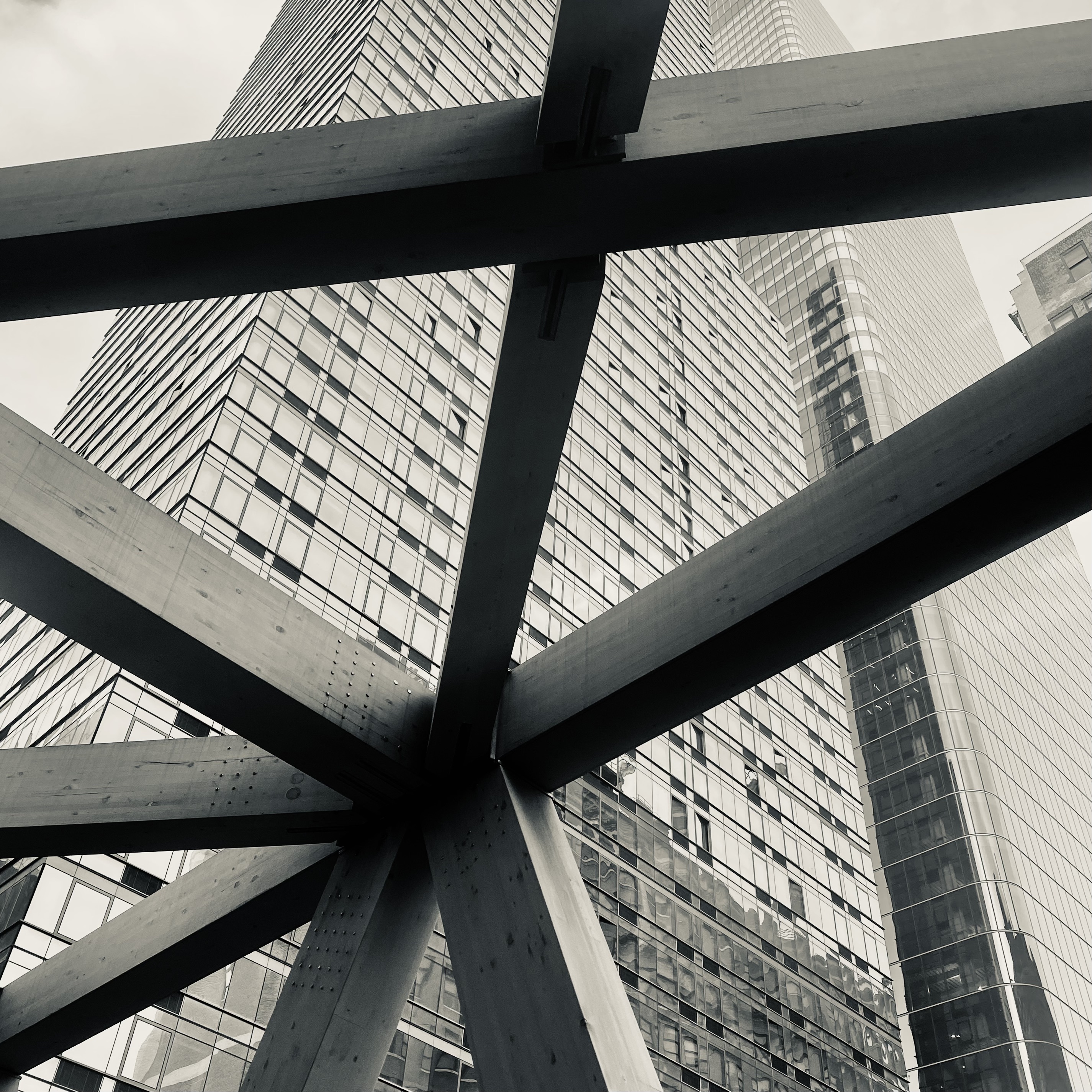
It looks as if Hudson Yards is finished, finally.  You really do get the sense you are in a city of the future, not New York.

Except when you look down.  

Tennis anyone?  Or pickle ball?  I can't tell.

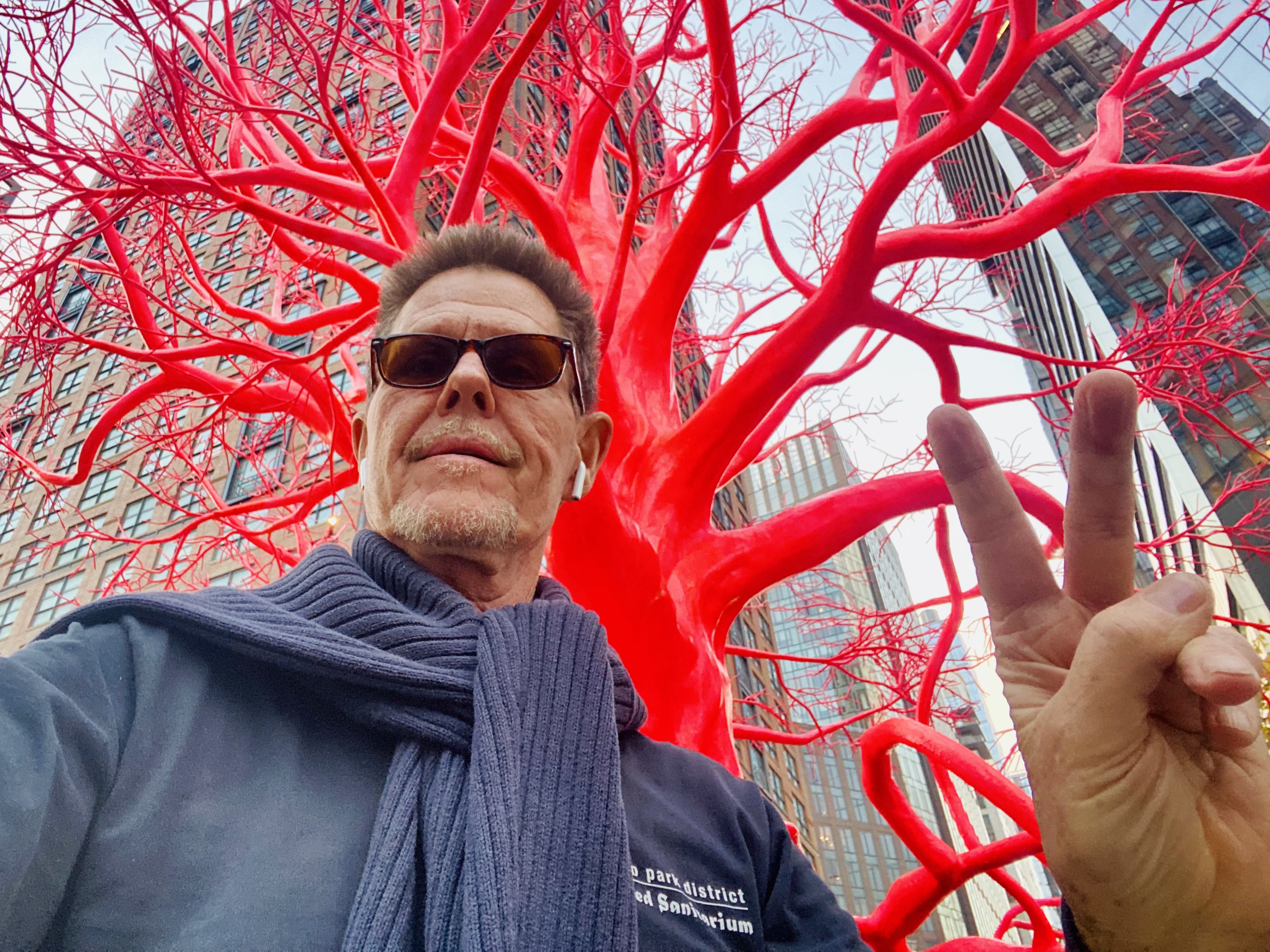
I'd only seen "Old Tree" by Pamela Rosencranz from a distance before.


Apparently the Vessel has become the back-drop for outdoor entertainment.  Boo!


Imagine the view from the top instead of eyesore at the bottom.


At this hour, mirrored construction panels on the Javits Center really do add something to a blah building.


Friday, November 3, 2023

West Coast Art Bro

I have to admit that Ed Ruscha's back story--he once dated Diane Keaton!--delivered me to THEN NOW more than any particular interest in his first retrospective at MoMA.  Seeing his work here and there over the years hadn't made much of an impression and I never could figure out how to pronounce his name, a problem now solved by his explicit instruction in a display case.  It's ROO SHAY although I can't remember if the accent is on the first syllable or the second.

"Actual Size" by Ed Ruscha (1962) 
But I quickly warmed up to his early, graphic work filled with blue California sky. 


"Standard Station, Ten-Cent Western Being Torn in Half" (1964)
It certainly offered an enticing (and meta) selfie back-drop.  Those were the days.

"Large Trademark with Eight Spotlights" (partial, 1962)
I hadn't known Ruscha was a photographer (we both took the same shot in Rothenberg, six decades apart), but his obsessive documentation of Los Angeles suggested that we had something in common as young men who had left dusty towns--Oklahoma City, in his case--for life on opposite coasts.  New York's much older, down and dirty architecture in the 70s had bewitched me, too.

Normandie (1965)
Every Building on the Sunset Strip (1966) demonstrates yet again how much artistic creation requires the courage of your convictions.  Ruscha's belief that he was making art made it so. Overtime, he shot 750,000 images on the streets of Los Angeles, many from a flat bed truck customized for that purpose.  The Getty has digitized his negatives creating an exhaustive visual archive of a city as it aged from the 20th century to the 21st. 
 

Psychologists say that people love nothing more than the sound of their own name spoken by someone else.  Maybe that's why I mistook this for mine.  

"Self" (1967)
I must admit I was intrigued by the "Chocolate Room," which Ruscha debuted in 1970.  Please don't eat the art.


Every career has its ups and downs.  His painting becomes less interesting as the concept loses its freshness, perhaps even to himself.  Another artist painted this background; he added the text from High-Rise, a dystopian novel by J.G. Ballard.

"The Music from the Balconies" (1984)
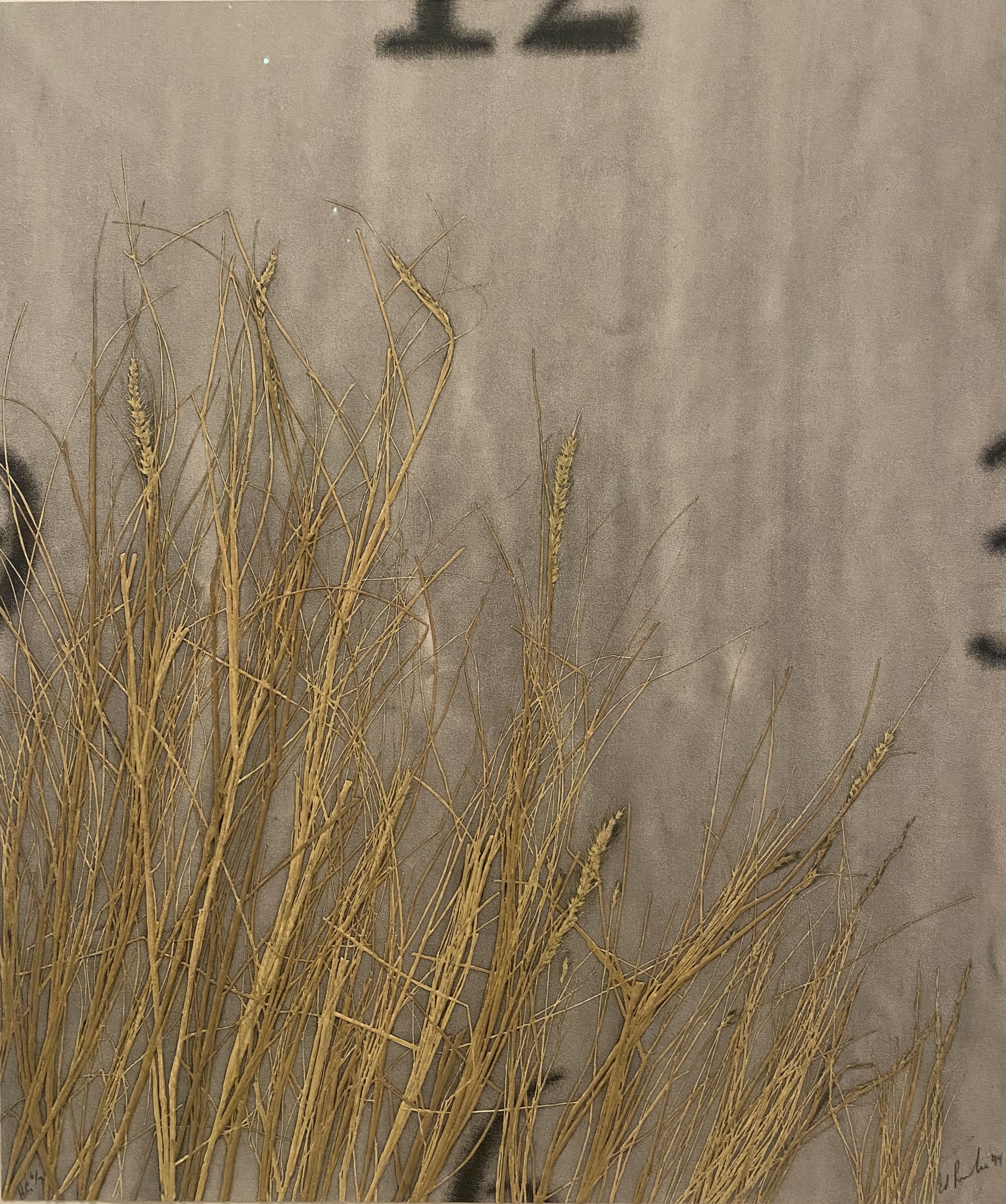
Ruscha appears to be shooting for something different in this atypical work.  It eschews words for numbers and hearkens back to his midwestern lineage:  the inevitability of harvests.

"Clock" (1994)
One gallery exhibited mostly black and white works.


This sophomoric, politically incorrect palindrome has become even more of a flash point since its creation two decades ago.

"Tulsa Slut" (2002)
Ruscha, now 85, continues to work, occasionally without his usual subtlety.  

"Our Flag" (2017)
THEN NOW didn't draw crowds as large as those in other galleries on the free night sponsored by Uniqlo.


Twilight turned out to be the perfect time for my first exploration of the sculpture garden since the museum's redesign.


"Group of Figures" by Katharina Fritsch (2006-2008)
How do diners at the Modern feel about getting a rear view?
 
"She Goat" by Pablo Picasso (1952)
"Snowman" by Peter Fischli (2016)
"Back I-IV" by Henri Matisse (1908-09)
"Mama Ray" by Wangechi Mutu (partial, 2020)
"The River" by Aristide Maillol (1948)