Thursday, March 6, 2025

The Bunker Playlists II

We hit the Bunker Art Space again, almost exactly a year after discovering it.  This season's playlists were less anodyne than last, which included The Endowed Chair, Citrus and Odalisque.  Times have changed, for sure, with the importance of art in my life increasing in direct proportion to the intensity of the assault on our democracy.

"Klick" by Robert Arneson (1965)
The lobby offered a sneak preview, with a painting by Erika Rothenberg on the stairs declaring Democrats fear snakes more than Republicans do.  Hmmmm.

"Monument to the Known" by Radcliffe Bailey (2021)
A Wing and a Prayer

The curators assembled more than 300 objects under this hopeful, if scattered, rubric. They clearly have not embraced the anti-DEI backlash that's so au courant in much of the rest of the America.  Many of the works, including the "Soundsuit" (2011) by Nick Cave (right) were created by people of color, women and gay men.  The docent instructed us not to step on Lita Albuquerque's "White Pigment Rock Removal" (1978) as if we were in elementary school.


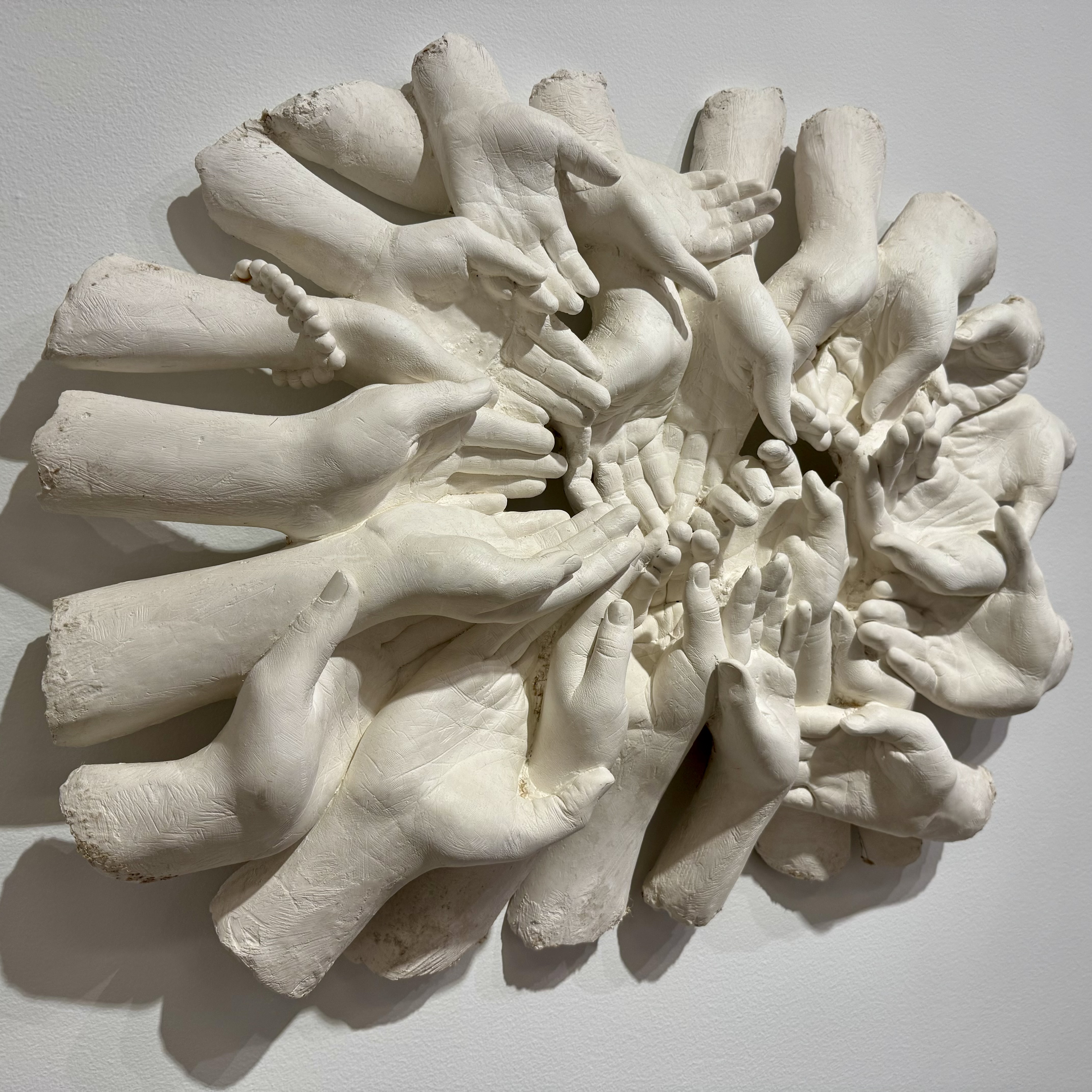
The Bunker eschews wall labels, encouraging visitors to reach their own conclusions about the art.  I don't consult the printed brochures which identify the works until after I've taken them in.  I never would have guessed John Ahearn created this monochromatic sculpture

"Open House #2" (1999)
. . . or that this colorful wall hanging was by Faith Ringgold even though I've seen fairly comprehensive retrospectives of both artists' works.

"Feminist Series:  Of My Two Handicaps #10 of 20" (1972)
Kyle DeWoody and Zoe Lukov, the daughter and goddaughter of the collection's owner, remind viewers that the name of the exhibit harkens back to the early days human flight, when safe landings weren't always assured. 
 
Untitled (Prayer) by Brittney Leeanne Williams (2018)
"Great Lengths" by Rose B. Simpson (2018)
"Lasiren" by Myrlande Constant (2021)
"Seaside Figure with Closed Fist" by Che Lovelace (2018)
Who knew that queer filmmaker Derek Jarman also produced three-dimensional collages?

"Eyes" (1987)
or that performance artist Marina Abramovic sculpted?

"Cleaning The Body" (1995)
This pendant looked as if it belonged in the recent hip hop jewelry exhibit at the American Museum of Natural History.

"Ode to the CMB (Cash Money Brothers) 
by Hank Willis Thomas (partial, 2006)
Unidentified
One of the oldest works on view is also one of the most striking.  The German-born artist eventually settled in California where she wrote The vibration of this light, the spaciousness of these skies enthralled me. I knew there was a spirit in nature as in everything else, but here in the desert it was an especially bright spirit.

"Intimation" by Alice Pelton (1933)
"Male Figure with Antennae" by Charles Smith
"Sock Hop" by Honor Titus (2020)
"Priss Installation" by Kim Dingle (1994-95)
After the success of Anora (hooray!) and the shout-outs sex workers got from this year's Best Actress and Best Director Oscar-winners in their acceptance speeches, it was very cool to see their work represented in the Bunker, too.  This provocative installation by Catalina Ouyang dates back to just before the beginning of the "Me Too" movement and the first election of you-know-who, despite his recorded misogyny.

"Devotion" (2016)
A victimized schoolgirl rends a garment


. . . while staring at a series of selfies from the ex-lover who raped her.  I still can't get "Devotion" out of my mind.  It's almost the art world equivalent of a Blumhouse production.


Snakes

This playlist satisfied more perhaps because it's so shudder-specific for most people.  Has there ever been a more effective Hollywood elevator pitch for a horror film than Snakes on a Plane?  Well, maybe Psycho!


Medusa, my favorite mythological figure, figures in several compelling works, including one which alludes to the murder of Gianni Versace by a gay serial killer.

"To Die For" by Frank Moore (1997)
Did this diner turn to stone?

"Medusa" by Vic Muniz (1999)
"The Severed Head of Medusa" by Damien Hirst (2015)
With Mar a Lago just two miles away, it's tempting to think Jenny Holzer, one of America's most political artists, foreshadowed today's chaos by choosing the hair color of our current monarch for her anti-snake screed.  The appearance of the serpent signifies all is lost. He is a symbol of our failure and our fate.

"Black Book Posters AKA Inflammatory Essays" (1988)
"Modernist Design & Garden Snakes Who Love It"
by 
Patte Loper (2004)
Unidentified
"Snake Skin Ring" by Math Bass (2020)
"Flesh Lust" by Samantha Rosenwald (2022)
"Chiasmus 2 (Green) by Jessi Li (2024)
"Red To Yellow Kill A Fellow" by Pat Phillips (2019)
"Shadow Cruiser" by Isabelle Albuquerque (2024)

In Between

As much as I enjoy visiting the Bunker, I'm sometimes confused by the display of works (often in the bathroom) without identification of any kind. Gay knowledge proved helpful in several cases. This joyful water color captures the Stonewall trailblazer a lot better than the mosaic water fountain in the Pines!

I'm pretty sure this is a film still featuring Cliff Gorman from The Boys in the Band. Although straight, he played the queeny (and hilarious) Emory with perfect pathos. Gorman also proved to be a mensch IRL; he and his wife cared for one of his cast mates while AIDS ravaged the gay heartthrob.


Untitled Pez Time Capsule by Todd Pavlisko
These works look like photos of LGBTQ+ subjects but they're not.  Dan Fischer drew them on graph paper.

Huh?  Not that there's anything wrong with art that produces this kind of response.  Love the Twister-style carpet.

"Licked, Sucked, Stacked, Stuck: A Confectionary History of Contemporary Sculpture"
by Paul Shore & Nicole Root (2010)
Unfortunately, I didn't record the name of the sculptor who inspired this crazy homage.

Sixties

Let me say just this about a playlist I anticipated loving:  much of the mostly abstract art exhibited would have been a lot more appealing printed on fabric worn by models or Hullabaloo dancers than painted on canvas.

"Dracula" by Leslie Kerr (1965)
"Pod Series:  Cock Crow" by Jorge Fick (1969)
"Swell" by Peter Agostini (1963) + "Craterewa" by Paul Feeley (1963)
"Another Time" by Paul Waters (1969)
"Napoleon on St. Helena" by Roy Deforest (1962)
Johan Grimonprez did crack me up with Double Take (2009).  If my companions hadn't been waiting outside, I might have watched the entire movie which stars Alfred Hitchcock as well as Nikita Khruschev and Richard Nixon.  It's based on a recommendation Jorge Luis Borges once made in a short story:  if you meet your double, you should kill him.  Hitch defines "MacGuffin" in this excerpt.


Surveillance

This playlist hit the sweet spot with a variety of interesting takes on an increasingly prevalent aspect of modern life now that everyone is equipped with a camera phone.  Ryan Murphy definitely should devote a season of American Crime Story to Patty Hearst.  While working as a publicist for Crown Publishers early in my career, I met her ex-fiancé, Steven Weed, a math teacher who was about to cash in on the relationship he had with his former prep school student by writing a tell-all book, My Search for Patty Hearst.  Men can be gold diggers, too.  Who could predict that John Waters (whose rubber snake "Slimy JW" [2006] is also on view) would cast Hearst in a couple of his films after she served two years in federal prison, before being pardoned by President Jimmy Carter and marrying her bodyguard?!

"Patricia Hearst: A Thru Z" by Dennis Adams (1979-90)
"Under Surveillance" by Francesca Gabbiani (2024)
Something about this strange painting (is the man missing his legs?) by Lucky Debellevue delivered a subliminal charge.  Turns out the New Orleans-born artist was pals with one of Rainer Werner Fassbinder's lovers, which explains the title reference.  Gaydar works on art, too!  And no, Franco Nero--one of my earliest crushes--is not paraplegic--he might even have a third leg!  Only Vanessa knows for sure.

"Franco/Querelle" by (2023)
Franco Nero (undated photo)
Given the fetish value of Erwin Wurmk's oversize "New York Police Cap" (2010), it provided a loaded back drop for posing housemates. Does the cork pattern on the floor allude to sound-proof rooms?


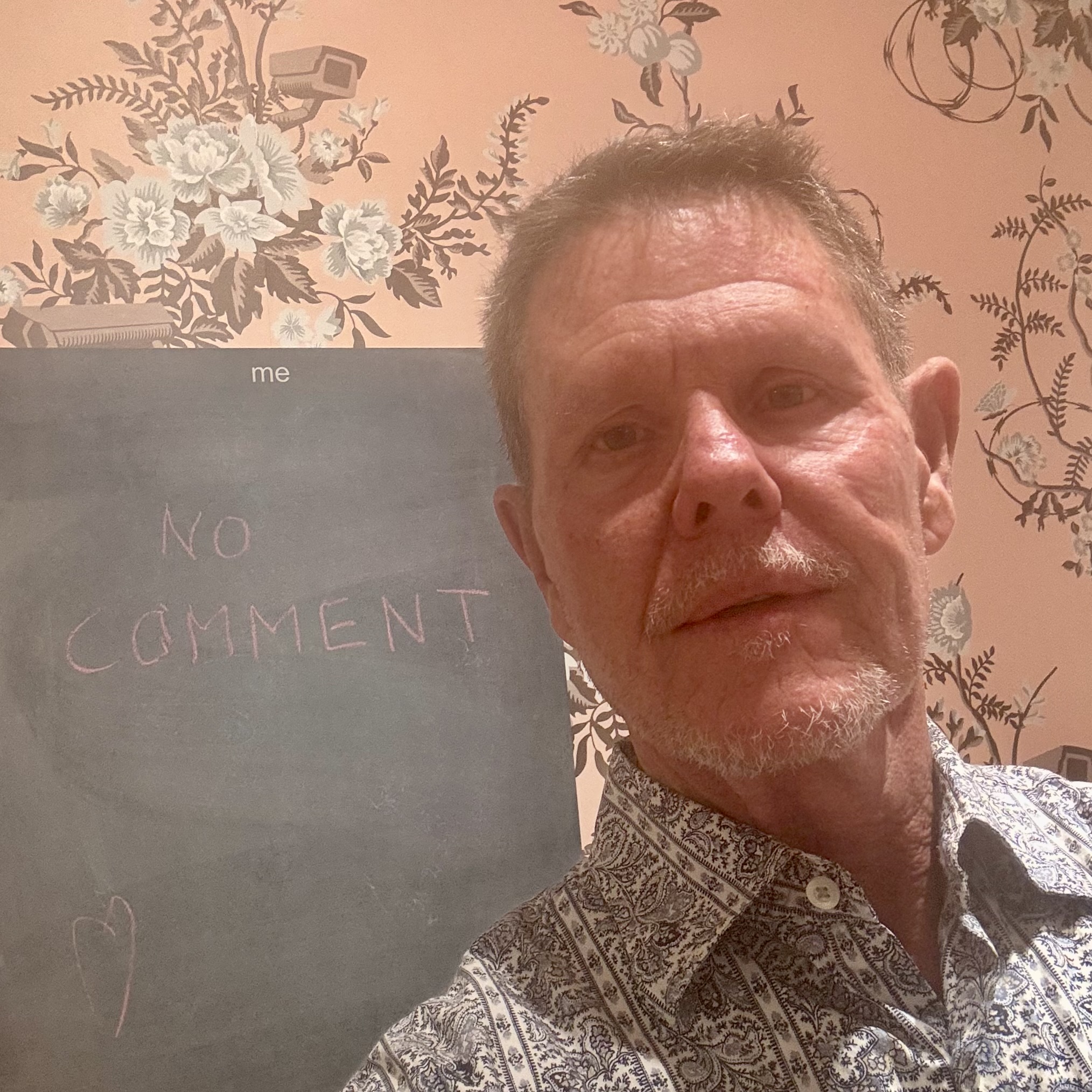
The phrase behind me on the blackboard in "Two Way Mirror" by Jim Hodges (2006) is missing from my vocab.  Notice the tiny surveillance cameras embedded in the wallpaper. Kudos to the exhibition designer.


Just to be clear:  immigration policy during the enlightened O'Bama administration was pretty fucked up, too.

"Borderlands No. 2:  They Almost Got Me (pajarita Wilderness) by Sandy Rodriguez (2019)
Stop and frisk continues for people of color in New York City.

"Up Against The Wall" by Jane Dickson (2023)
"Small Town No. 1" by Cate Pasquarelli (2023)
"Guard Dog Sign" by Robert Lazzarini (2010)
"From the Series:  The Pleasure Is Back"
by Gretchen Bender (partial, 1982)
This video includes works by Ted Riederer ("The Cosmos Record, " 2020); Sanford Biggers ("Mandala Co-Option," 2001); and  Jimmy Raskin ("God Car," 2023) from both A Wing and a Prayer and Surveillance.


The Library

Signs ask you not to touch the books at the Butler but you're welcome to peruse the relevant knick knacks cleverly arranged on the shelves.


Andy Warhol dish towels!


This cartoon about the owner of the Bunker's art collection (caption:  I would like to conclude my Powerpoint presentation by summing up the gallery's entire business plan in one easy-to-remember phrase.) reminds me of a corollary joke:  What does a 500 pound parrot say?  Polly wants a cracker.  NOW!


No seating is provided inside the Bunker.


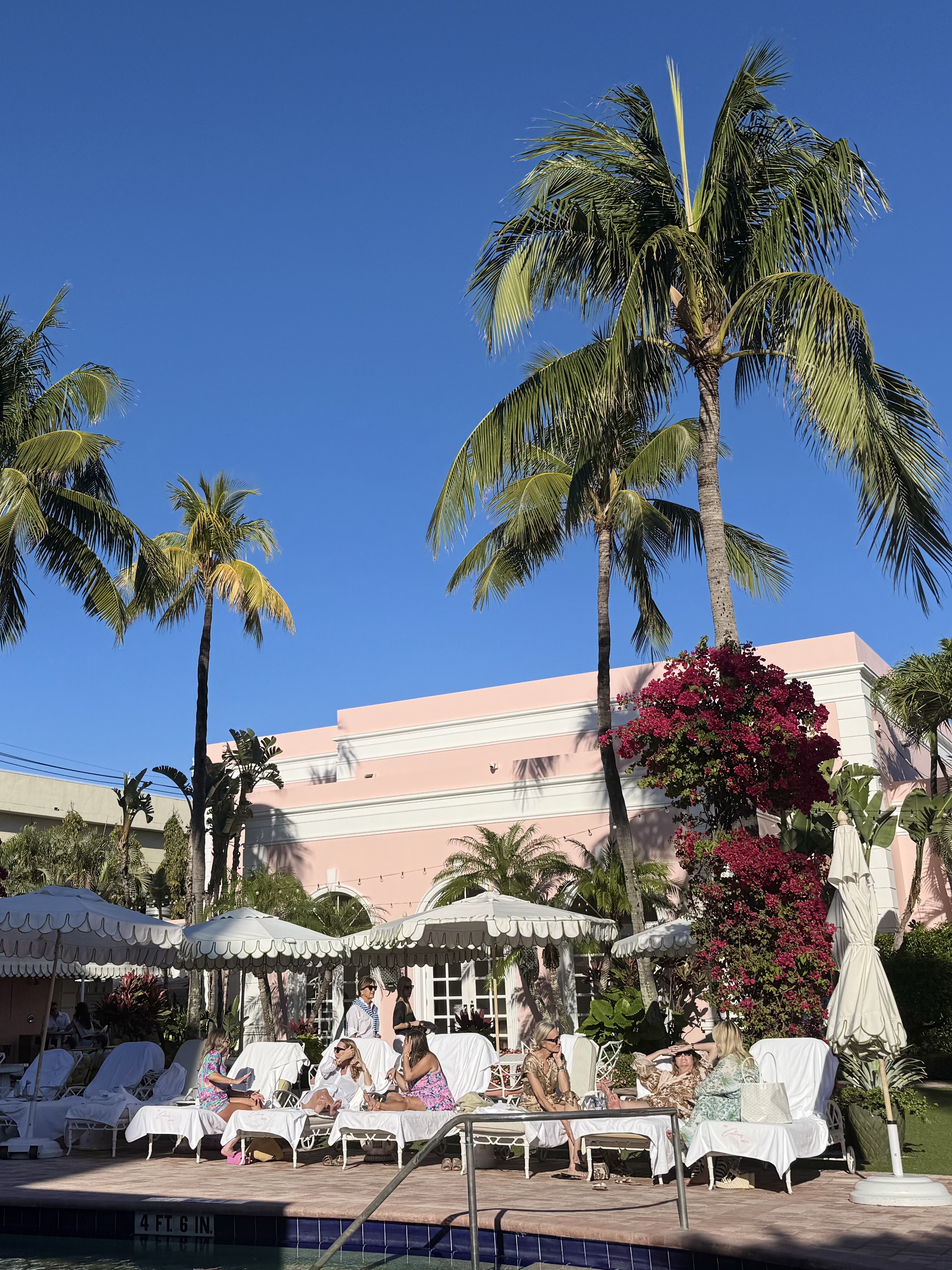
We had a couple of hours to kill before our early-bird dinner reservation so we crashed the pool at the Colony Hotel.  It took only a single "Monkey Business" cocktail--it's also the name of a yacht that brought down a presidential candidate, when extramarital affairs mattered to voters-- to vanquish my feelings of imposter syndrome.


An 80something chainsaw groupie appeared to catching up on his homework. "How is it?" I inquired, disingenuously, when he shuffled past our table. "It's really helping me understand how he has accomplished so much in so little time," the man replied, sincerely.


Gays may no longer be encouraged to flock to the Colony on Thursday evenings but during the afternoon it welcomes weirdos with open arms.  Like Cher in Clueless, this gentleman did a couple of laps around the pool before committing to the only location that also could accommodate his rambunctious pooch.


Christine treated us to dinner at Oceano, the finest restaurant in Lake Worth Beach.


I was skeptical of the beef tartare toast until I tasted it.  Those white buttons are difficult-to-cultivate Hon shimeji mushrooms.


The chef imported an oven from Modena to bake this superb finocchiona pizza with fennel-flavored sausage.


But nothing, NOTHING could compare to this lemon bar with strawberry sorbet, crowned with a melt-in-your-mouth sweet biscuit!  The husband and wife team who own the place--she's the pastry chef--have managed to increase the size of their restaurant exponentially without sacrificing quality.


 Leave it to Thom.  "This is what I thought retirement would be like EVERY day," he commented.  Thanks again, Christine!

More Bunker Artspace:

Saturday, March 1, 2025

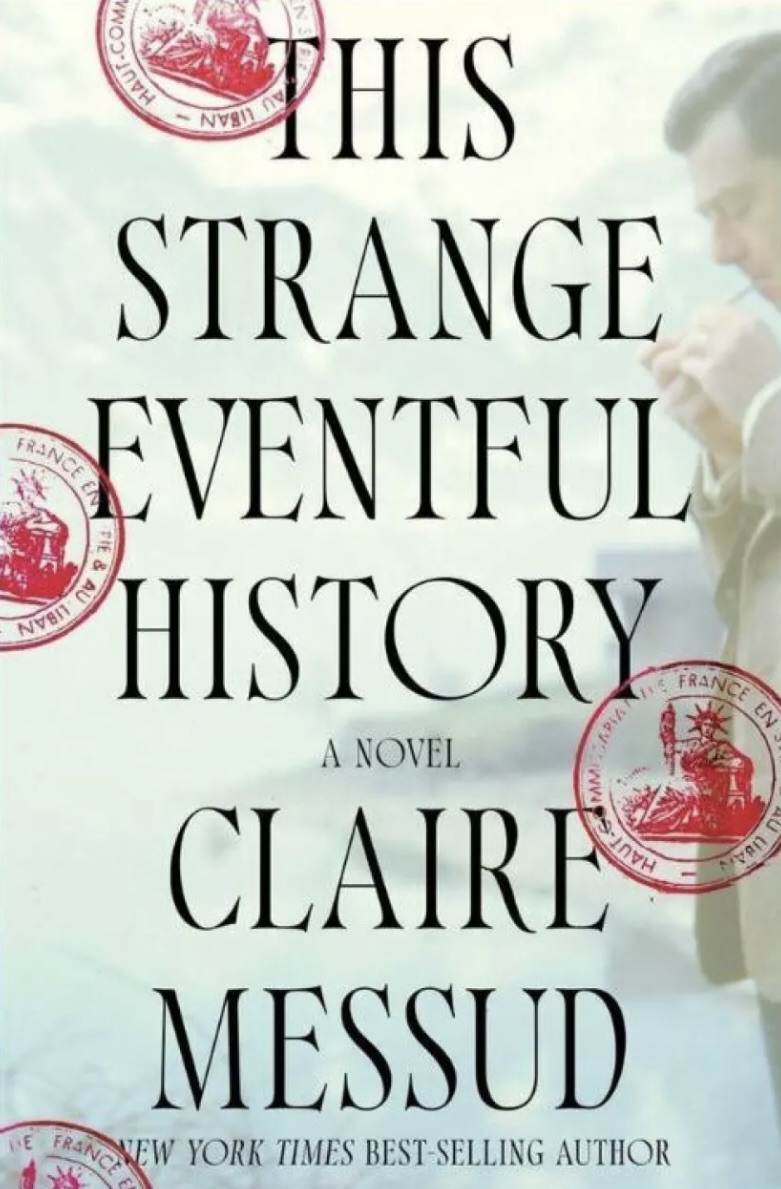
This Strange Eventful History (4*)


What I thought was a family saga exploring the impact of geographical dislocation, narrated in multigenerational voices across decades, turned into something quite different by its end.  Making the twist even more shocking is the sense that Claire Messud--who found an unpublished memoir a thousand pages long among her grandfather's personal effects after his death--is coming clean about a long-buried secret to demonstrate how individuals and non-blood relationships can be scarred by an unthinkable situation that preceded their births.

Gaston Cassar, the patriarch of This Strange Eventful History, is in a pickle when it begins: born in colonial Algeria and now serving in the French Navy, he decides to stay in Salonica instead of joining General Charles DeGaulle's resistance in London, after his wife and two children have taken refuge from the Nazi invasion with relatives in their homeland.  Post Algerian independence, the pied noir family finds themselves in Paris before their peripatetic lives play out over the next 70 years as France fades from global relevance, oil turns into gold and English becomes the lingua franca.

 My friend, you’ve no idea—the Brits, the Americans, they’re all over this industry, it’s in their hands. What was the IPC, after all, all those years ago? Even our Algeria project is in significant partnership with Shell—and what do you know about the Dutch? Have you ever met a Dutchman who’ll speak French? It’s almost a matter of principle for them, solidarity with their Belgian cousins. No, it’s the reign of chewing gum and Churchill from here on out.” Rondot twirled his infernal coin again. “We lost the war, my friend. It’s all very well for de Gaulle to pretend otherwise, and who can blame us for wanting to believe him? But behind the scrim, the facts are as they are: to the victor go the spoils. The future is in oil, and the future is in English.

Francois strives no less than his father to succeed in an unwelcoming world--speaking English with a French accent almost as heavy as his smoking--climbing the corporate ladder in Canada, Australia and his beloved United States.  His younger sister Denise, introduced as a fantasist from childhood, struggles with fewer opportunities available to single women, until she moves to Buenos Aries to join their parents and meets a would-be mentor.  

In this way, she [Fraulein Lili Lebach] seemed to Denise a model of how to proceed in exile: she had retained within her and miraculously now, all these years later, without bitterness, the splendors of her youth; but she had moved on, and away, from that past. She was an émigré and a cosmopolite, a citizen of the world, and she carried her griefs—legion and enormous—locked inside her. But she was determined to live, fully. 

Both Francois and Denise are haunted by their parents' idealized marriage which Gaston describes as "the masterpiece of their lives."  Francois impulsively marries Barbara, a Canadian with whom he shares a lifelong sexual attraction, if little else.  They literally come from different worlds and in the novel's most heartbreakingly mysterious moment Barbara declares I never would have married you if I'd known, and turns her back on him in bed.  He protests that he didn't know either, but the reader cannot help but wonder if his youthful depression, blamed on his exile from sunny Algiers to gray Paris, indicates otherwise.

Messud writes more persuasively about the inner lives of her female characters, perhaps because they are less constricted by the rigid expectations that make Francois so miserable.  Her chapter about Denise's short-lived Argentinian happiness in particular masterfully evokes a crippling denial typical of its time and place. When Chloe, clearly a stand-in for the author, discovers a cache of her spinster aunt's delusional love letters to her unavailable (and ultimately disappointing) soulmate, she muses at length in the first person, the only character to do so.

When I read a novel or watched a film, I could so often predict what would happen next. Plot felt to me inevitable. But in life, turns were not programmed or decided, and we had agency over only some small aspects of our stories. Implacable chance ruled. As passengers, we could not determine whether the plane crashed; or as patients, whether the operation proved fatal. Imagining did not make it so—thank goodness. But how much of our lives did our minds control? And what of love? Of what had my aunt’s long love consisted? Was it the less real for existing only in her head? Or were her years in love as wonderful, for her, as, well, being in love? What of my parents’ love, if love there was? They had now had a long and very real life together, shared hours and weeks and years, but was their love therefore more real than my aunt’s, or was it simply that their often unhappy life together was more real?

Choe's spin on her aunt's devotion and her parents's relationship is the kindest possible interpretation, to say the least, given Messud's refusal to romanticize her principal characters' lives and her curious lack of detail about Lucienne, the family matriarch.  It's almost as if grandma didn't count because she didn't share the gene for writing down the secret of her own marriage, which appears to have been based solely on gratitude for having been rescued from life as a single woman in a man's world. Earlier in the novel, with the perspective of her own incipient adulthood, the author empowers young Chloe to share her own hard-earned wisdom. 

Look at all the others with whom you share the boat. Beyond the most immediate, you can’t choose your companions for a crossing or a generation. You can’t know the weather in store, the size of the waves. All in this strange eventful history is uncertain . . . The boat, on this late-twentieth-century crossing, was far from stabilized, and many things fell from their places. But, inshallah, there would be a next voyage, and a next, traveling forward into an invisible future. None of us could predict where those things, or ourselves, might land.

So true, like everything else about Messud's unique family history, as sad as it is strange and eventful.