Coptic Cairo is jammed into one of the oldest sections of the city. The Hanging Church is "suspended" atop a Roman fortress which has sunk nearly 20 feet since ancient times.
The more familiar stone, wood and iron decoration came as a relief after so many sandstone ancient temples.
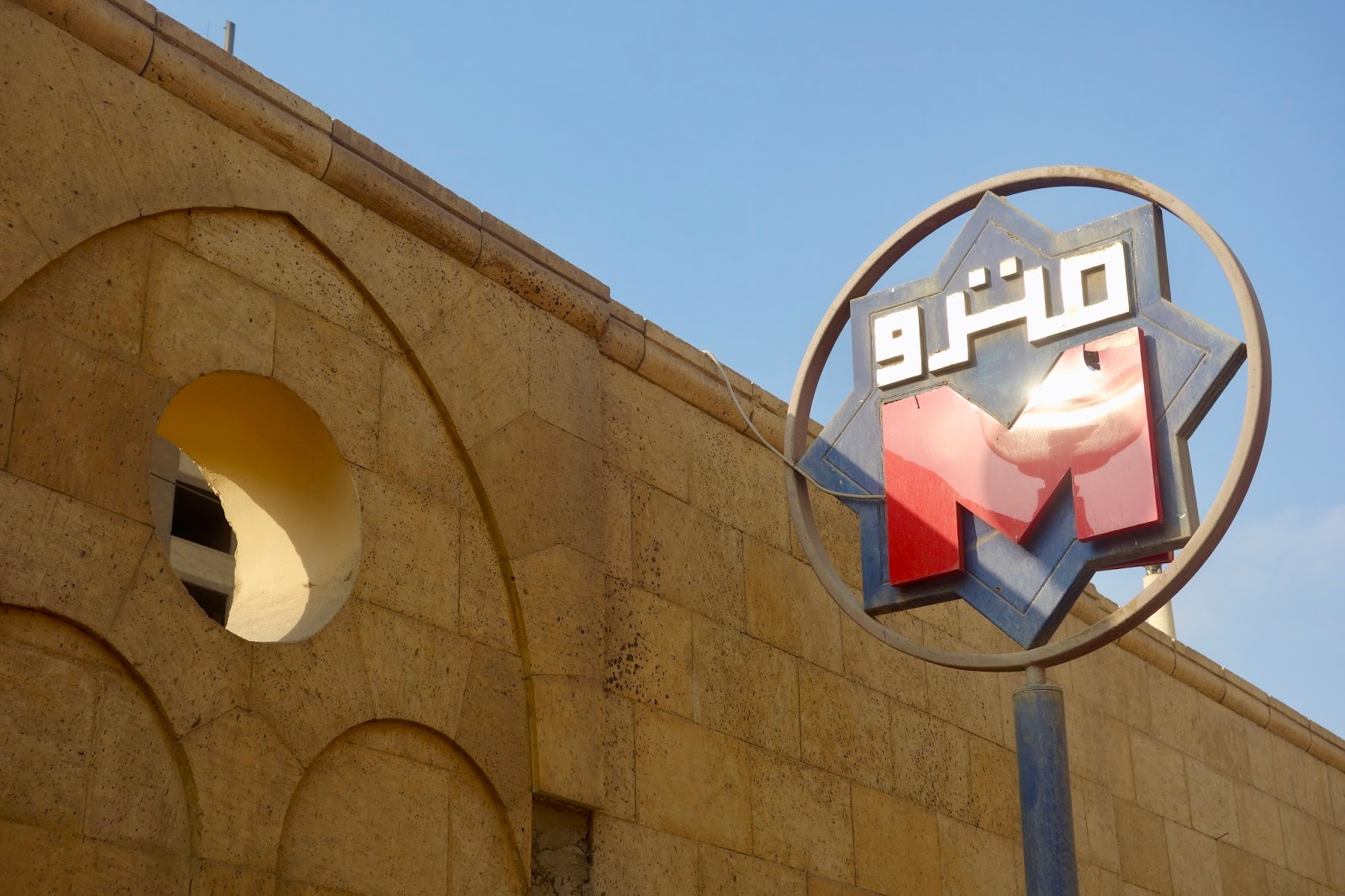
We passed a metro stop on our way to another church.
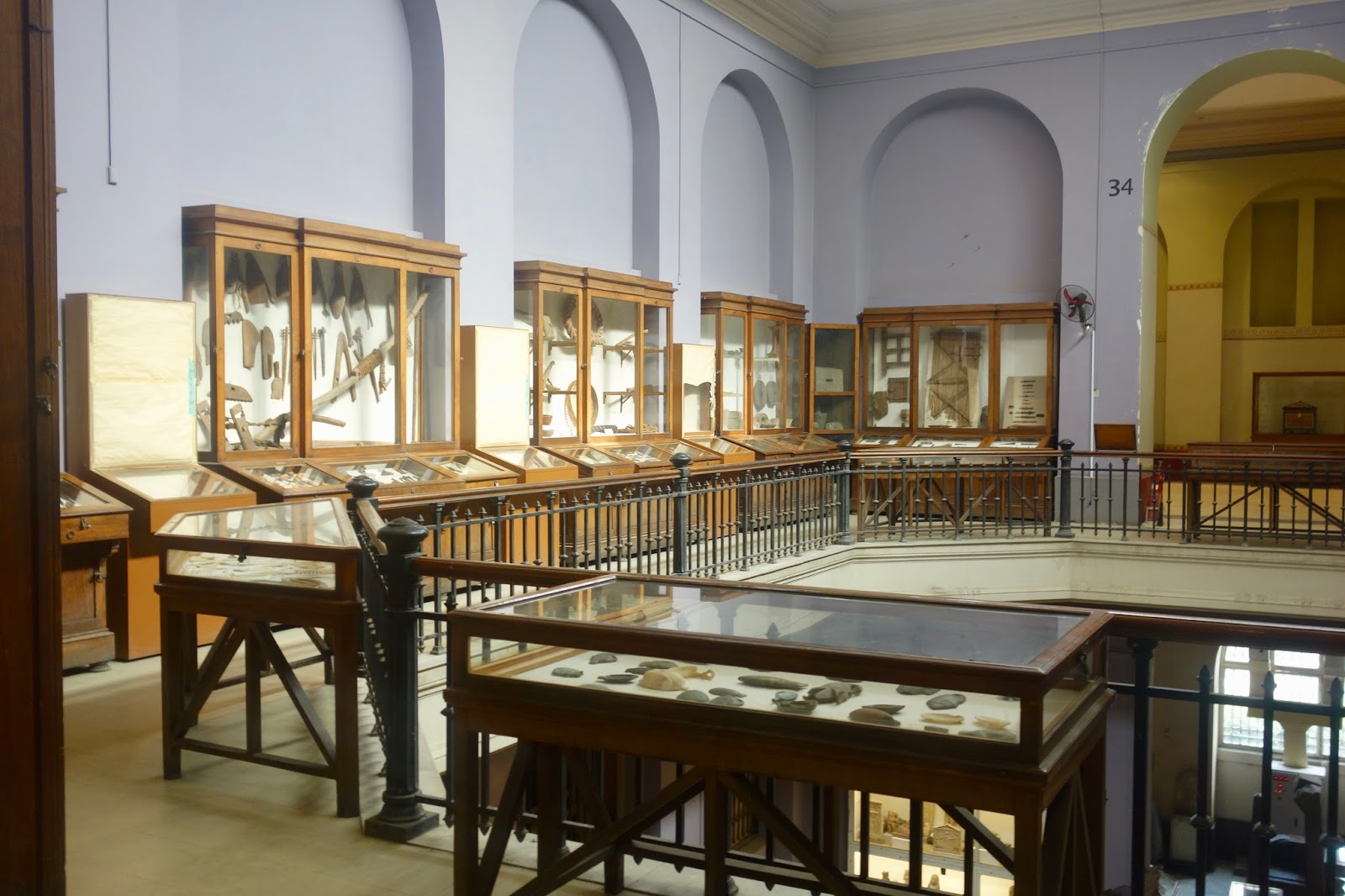
The Egyptian Museum, just off Tahrir Square, reminded me of a gigantic curio cabinet.
Finally, an actual lotus flower!
If all goes according to plan, a grand new showcase for many of the museum's treasures will open later this year in an enormous building within view of the Pyramids. Financed by the Japanese government, it's another example of how Egypt always has depended on the kindness of foreigners to display its archaeological treasures. Until then, mobs of tourists and schoolchildren will just have to sweat it out in the now shabby museum that the French built at the turn of the 20th century.
The place isn't even air conditioned but it definitely has an old-world charm.
Security is tight--you can't go wrong with a Yale lock!
Low tech mirrors enable visitors to view carvings beneath sarcophagi.
If there were a "Real Housewives of Cairo" franchise, Shaimaa, our freelance guide, could star. She lives in a tony suburban neighborhood called the 6th of October. It marks the date Israel invaded the Sinai Peninsula in 1967, long before her birth. A progressive Muslim woman with two sons, Shaimaa abandoned her hijab at age 16. She's also an ardent supporter of el-Sisi.
When I asked if Queen Hatshepsut might have been transgender because of her beard, Shaimaa said no but pointed to a depiction the controversial pharaoh who steered Egypt towards monotheism. "Look at the femininity of Akhenaten's lower body, it's almost as if he's pregnant."
Akhenaten, husband of Nefertiti and reputed father of Tutankhamun, certainly has androgynous features in this sculpture.
Several of the museum's kitschier artifacts appealed to me more than the boy king's treasures.
Although I did covet Tut's amazing shoe box!
Somebody needs a shampoo.
The Hall of Mummies costs extra. I snapped this one before a guard gently rebuked me.
Egypt's most powerful pharaoh lays in a case nearby. It seems a tad disrespectful that Ramesses II has been dug up and put on display for the masses. How the world has changed!
We boarded the Prince Abbas in Abu Simbel. With room for 160 passengers, the ship was barely 25% booked, mostly with a Dartmouth alumni group. They stuck to themselves.
President el Sisi was hard to miss on the other side of the dock. He's hoping to be elected democratically. Eliminating his competition likely will make that happen.
Our cabin and the main dining room lacked the charm we found on the St. George but the ship itself was well-maintained.
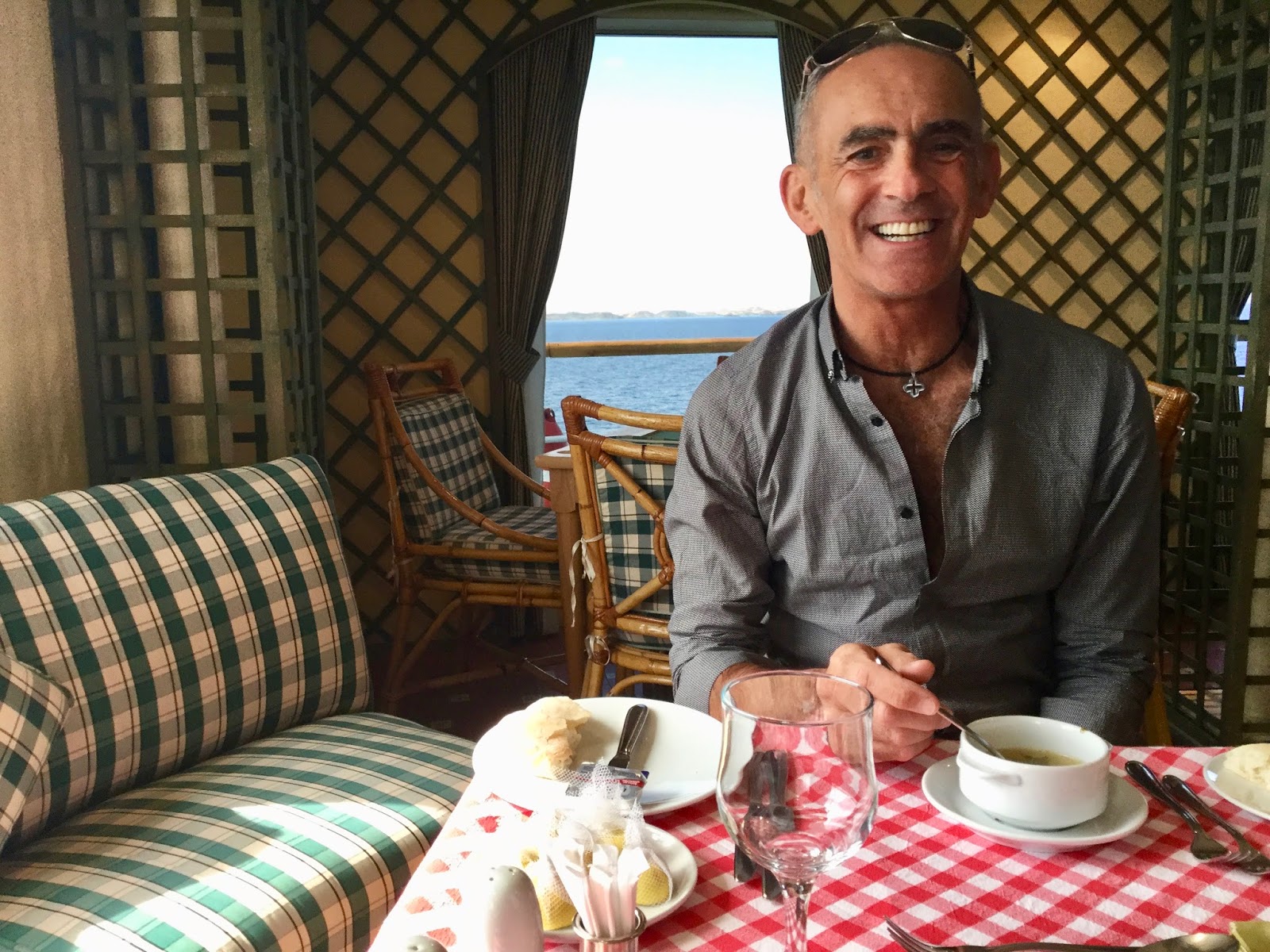
Especially the gleaming deck and a charming dining area at the rear of the boat.
Fewer temples left more time for the sundeck. And flies.
The ships initials wavered at the bottom of the chilly pool.
Tom booked a massage even before he unpacked.
The friendly and thoughtful ship manager began his career in the 80s when just 16 boats cruised the Nile. By the time Egypt's foreign tourism peaked in the 90s, that number had increased to 250 at some cost to the river. Currently, only three ships cruise Lake Nasser. Americans comprise the majority of passengers.
I met the captain, too. He doesn't need sonar because buoys guide him through deep channels. Typically the lake has a depth of about 150 feet although the water can rise if it rains heavily in Central Africa.
Shortly after our 7 a.m. departure, we passed the temples at Abu Simbel.
The long view revealed the artificiality of hills behind them.
A window reflected the site.
Qasr Ibrim, high atop a submerged hill, is the only Nubian monument that survived the creation of Lake Nasser in its original location.
Emad, our guide, explained how to read Arabic after a brief lecture.
Afterward, he wrote my name in both Arabic and in Egyptian hieroglyphics.
Late in the afternoon, we boarded a small boat to visit Amada. Gun-toting members of the Egyptian army and a plainclothes cop accompanied us. Security comes with the territory in a military dictatorship.
The Temple of Amada, the oldest Egyptian monument in Nubia, didn't look like much from the outside but colorful and well-preserved reliefs adorned the interior walls.
We began to suffer from temple fatigue on our way to Derr. It's hard keeping so much ancient and unfamiliar history straight.
Apparently Ramesses II kept a lion as a pet.
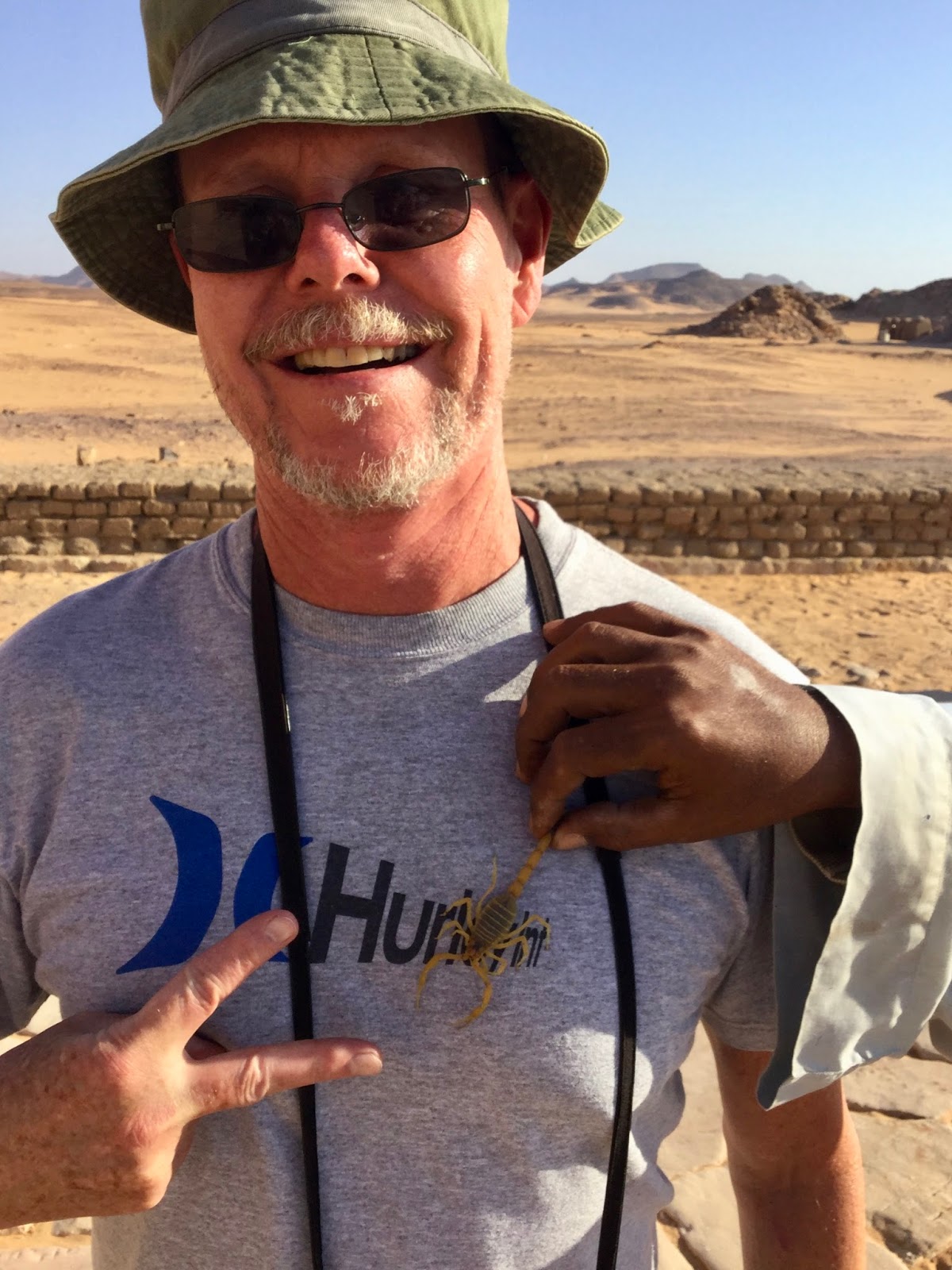
Real excitement awaited us outside. I hadn't noticed what this man was holding when we entered.
Emad held a scorpion in his hand to assure us it had been milked of its poison.
Needless to say, Thom would rather model a scarf than pose with the local fauna.
Pennut's tomb was our final stop. His, too, now that it, Amada and Derr were elevated and moved a quarter-mile from their original locations.
A gorgeous sunset awaited us the on the Prince Abbas.
The rise of the full moon on the other side was every bit as lovely. The arid vistas recalled those I'd seen as a teenager at a lake in southern New Mexico created by the damming of the Rio Grande. Lake Nasser is Elephant Butte on steroids with crocodiles, minus the waterskiing!
We had an early call for Wadi es-Sebua or Valley of the Lions.
Rows of sphinxes line the entrance to the first temple, constructed by Amenhotep III and restored by Ramesses II.
A pair of dogs greeted us.
We hoped to ride camels from one site to another but there haven't been enough tourists recently to sustain a business.
En route, Emad, a devout Coptic Christian, showed us the cross that had been tattooed on his wrist at the age of three.
Earlier, Thom had noticed the Virgin Mary screen saver on his phone. Interestingly, Muslims, Copts and Jews co-existed peacefully in Egypt for centuries.
I shot more video than photographs of our excursion, which also included the Dakka (Thom had another name for it) and Maharraqa temples.
But you can't beat still photography for panoramas and details.
After the Prince Abbas docked at Aswan overnight, we had an early call to visit Kalabsha Temple. Our boat took us past the Soviet friendship monument.
We had the temple to ourselves.
Except for a curious cat.
A flock of birds flew past the Kiosk of Kertassi.
The kiosk's columns practically glowed in the early morning sun.
Ramesses II is never very far away.
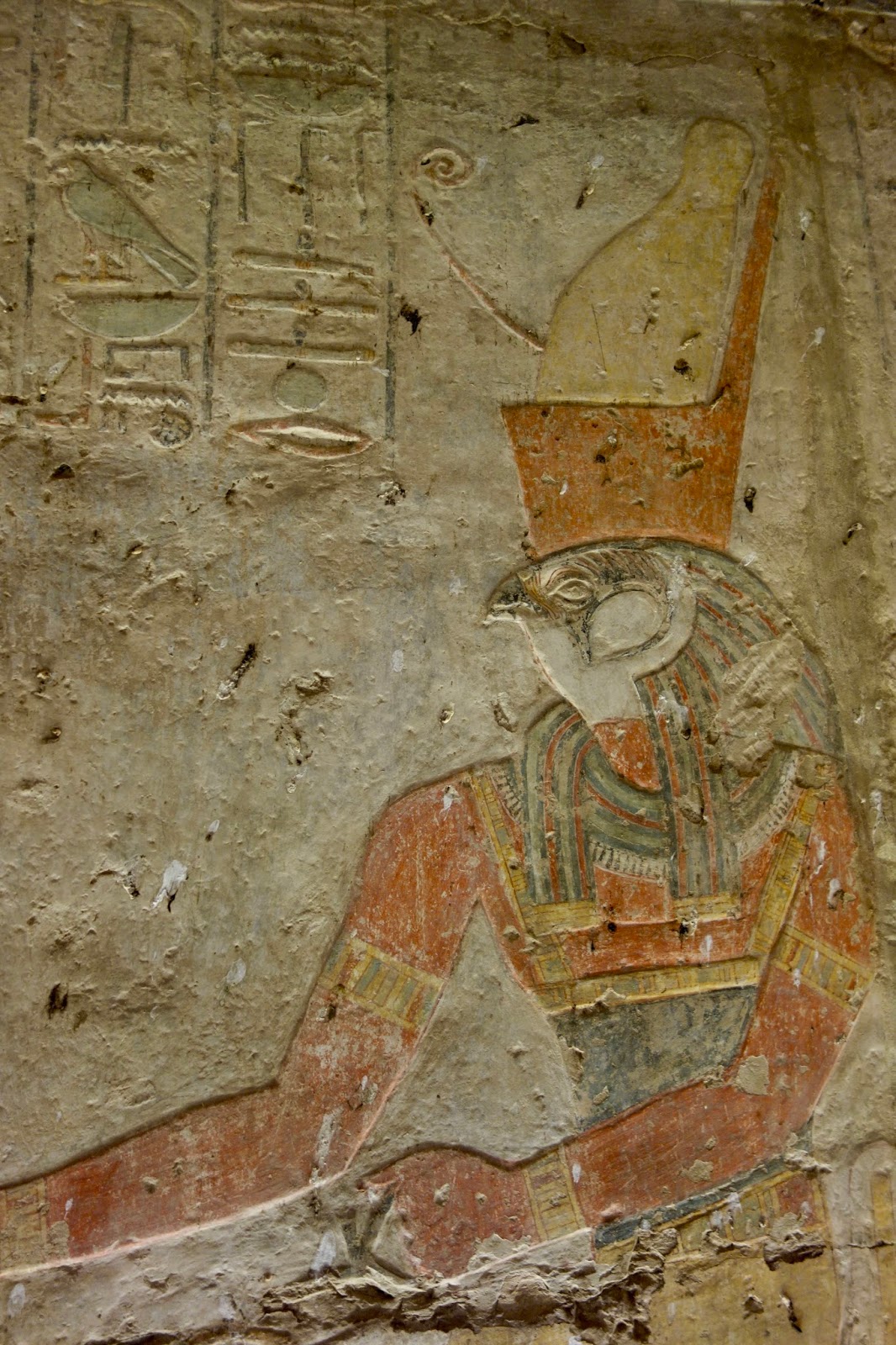
Beit El Wali, just around the corner, had a colorful relief of Horus.
Kalabsha itself, built during the Roman era, was never finished. By this time, all the Nubian monuments had pretty much begun to look the same! More lotus flowers and Isis.
Christians left their mark, engraving St. George on an exterior wall.
Speaking of which, Emad ended the tour with a Coptic blessing.
We headed to the Aswan airport and caught the 10:30 a.m. Nile Air flight back to Cairo. I could see the Sinai Peninsula and the Red Sea out my window.