Tuesday, October 15, 2019

Late Night @ the Guggenheim

I can't remember the last time I visited the Guggenheim.  Frank Lloyd Wright's spiral always astonishes.  It's almost as old as me!


Two shows drew me there.  Basquiat’s “Defacement”: The Untold Story documents the murder of Michael Stewart, a young artist in the early 80s, by police.  Only the East Village Eye took much notice at the time.


Here's some of the work Stewart did as a student at Pratt.   The night of his murder, police arrested him for defacing a subway station with graffiti.


Jean-Michel Basquiat created "Defacement," the centerpiece of the exhibit, on a wall in Keith Haring's studio.


He drew his inspiration from a protest flyer designed by David Wojnarowicz.


The murder outraged the downtown artistic community.  Another Basquiat work exhibited is "Irony of Negro Plcemn."  Black and Blue, a new thriller, explores that same irony.


Keith Haring commemorated Stewart's murder with a huge canvas.


He also wrote about it in his journal.


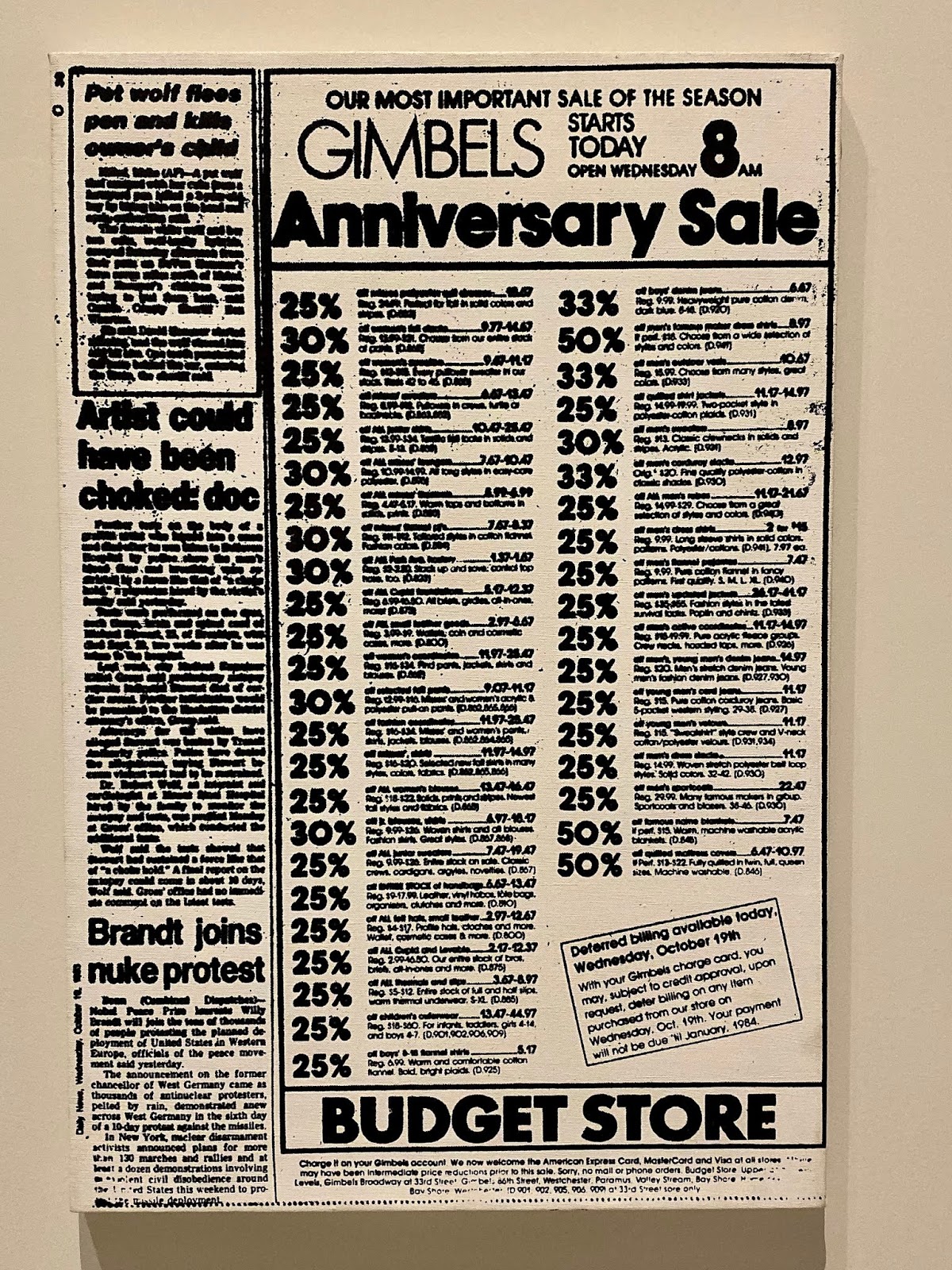
Andy Warhol alluded to the lack of media coverage in a silkscreen of a Daily News page.

Robert Mapplethorpe was active around the same time.  Patti never looked better


Implicit Tensions: Mapplethorpe Now revisits his influence on contemporary artists like Lyle Ashton Davis and Catherine Opie.


But it was Glenn Ligon's deconstruction of the Black Book that really got me thinking, not unlike "Slave Play," now on Broadway.  If nothing else, Mapplethorpe's aesthetic focus on black male beauty provoked some fierce reactions.


Even among the men who posed for him, like Ken Moody.


In my downward spiral, I passed more than a few additional masterpieces.  The two Louises, Bourgeois and Nevelson.


A camera angle combined two of Ruth Asawa's works.


Joseph Beuys.  Love how he's depicted in "Never Look Away," my favorite film ever about art (don't tell Gerhard Richter).


Alan Shields (detail).


Simone Leigh seems to be everywhere.  I first saw her work at the New Museum's gender show and more recently at the Whitney's Biennial.  But her curatorial recognition didn't help when New York City commissioned her to sculpt a new monument on Fifth Avenue. 


And Constantin Brâncuși.


Thursday, October 10, 2019

Whose Home?

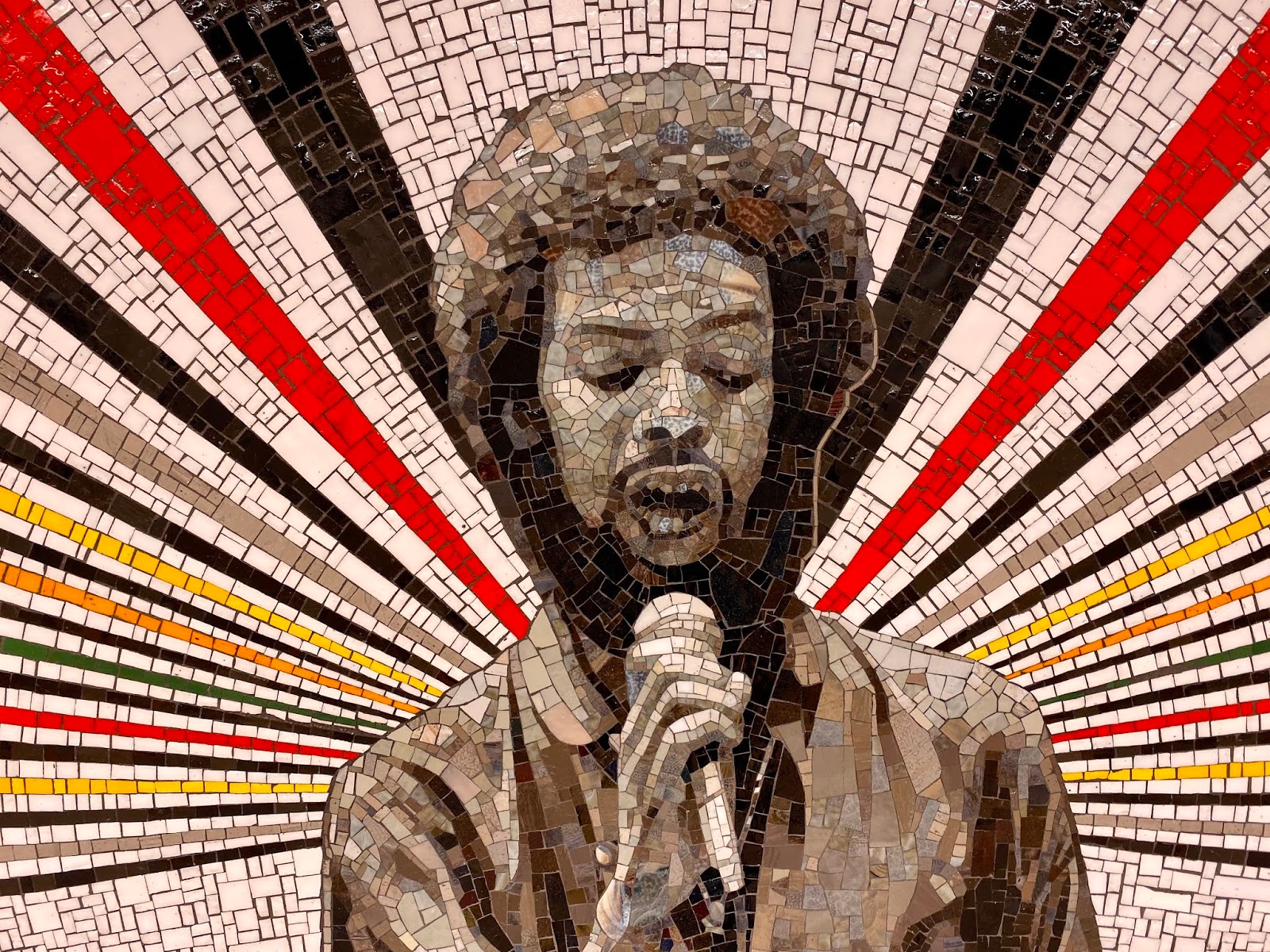
Afrocentric mosaics by Rico Gaston greet commuters at 167th Street in the Bronx.


This one depicts Gil Scott-Heron.  Other homies include James Baldwin, Maya Angelou and Sonia Sotomayer.


Weird landscape art behind a wrought iron fence caught my eye a block south on the Grand Concourse.


Anachronistic sculpture adorned the front yard too.


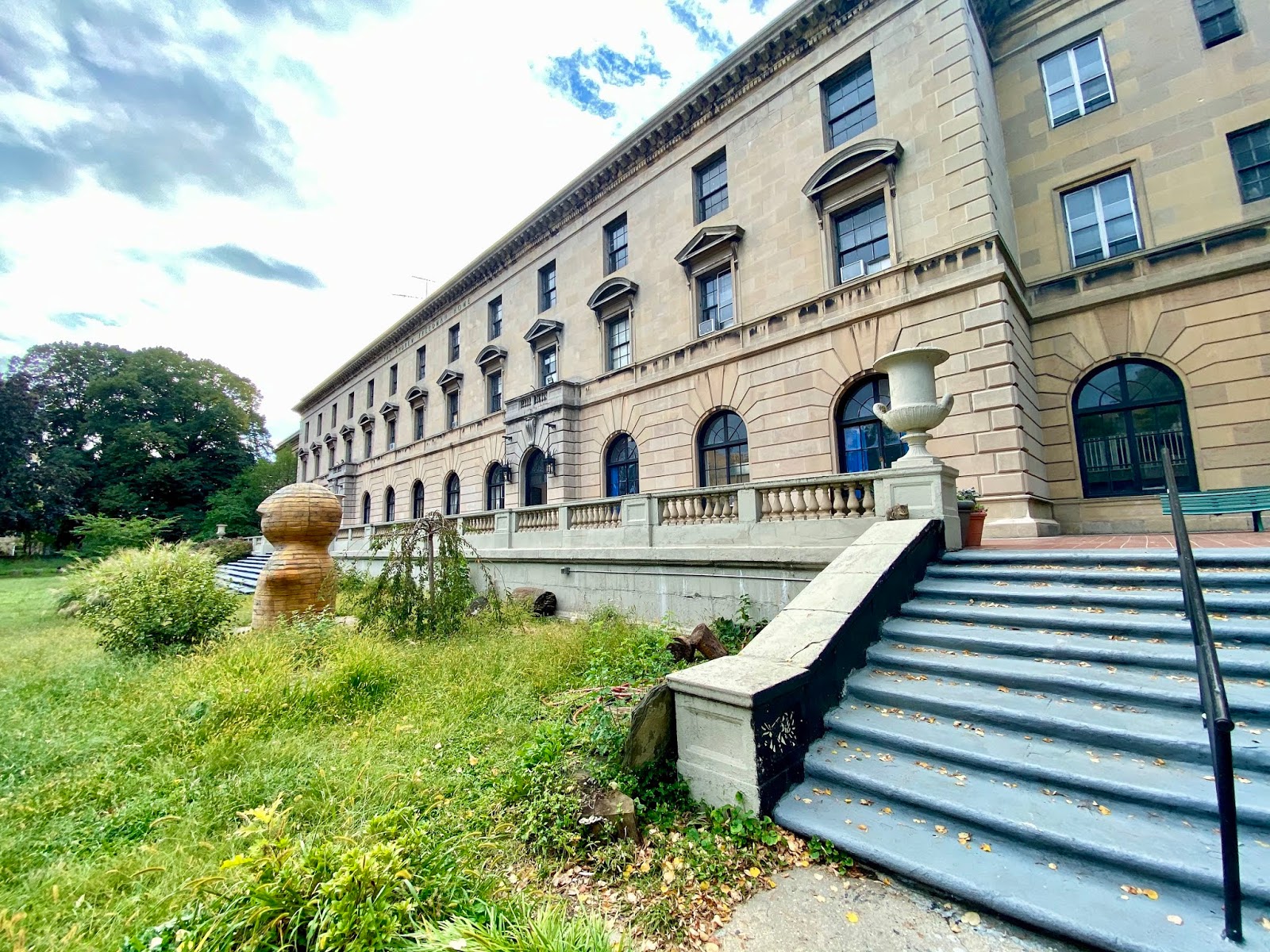
Welcome to the Andrew Freedman Home, surely one of New York City's more bizarre public spaces. Freedman, former owner of the New York Giants, built it almost a century ago as a place to retire for wealthy people who had fallen on hard times.


Two of the enormous rooms on the first floor have been turned into local art galleries.


Art work also hangs in the long hallways.


A rowboat washed up on the carpet.


Way beyond the art, a young woman studied.


Lay down your yoga mats here.


The furnishings and fixtures still have an institutional feel.


Pre-Digital Moments in (My) Time

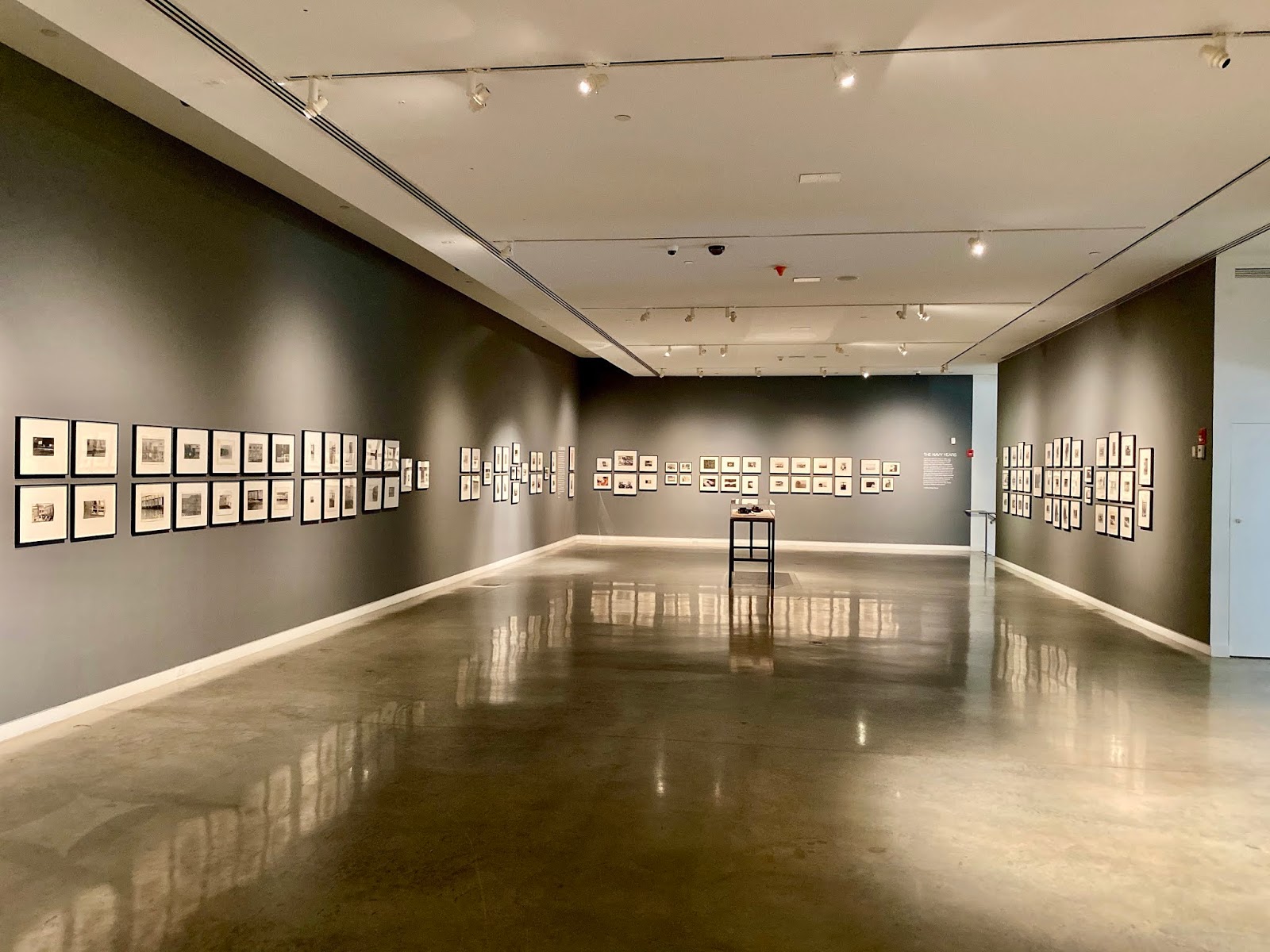
What would Alvin Baltrop, who died penniless in 2004 with barely any recognition, have to say about the exhibition of his photos at the Bronx Museum of Art?  It's very simply hung which seems fitting given the modesty and poor printed quality of the work.


Mostly black and white, the well-composed photos document his tour in the Navy as well as his fascination with the decaying piers on the west side of Manhattan in the 70s, shortly after a Daily News headline screamed FORD TO CITY: DROP DEAD.  It can't have been easy for a queer black man to capture the homoerotic vibe of life at sea, no matter how discreet he may have been.


The piers didn't require discretion although it's doubtful that the gay men who used them for cruising and sex welcomed Baltrop.  If his photographic ID, also on display, is any indication he didn't measure up to clone standards of beauty.  


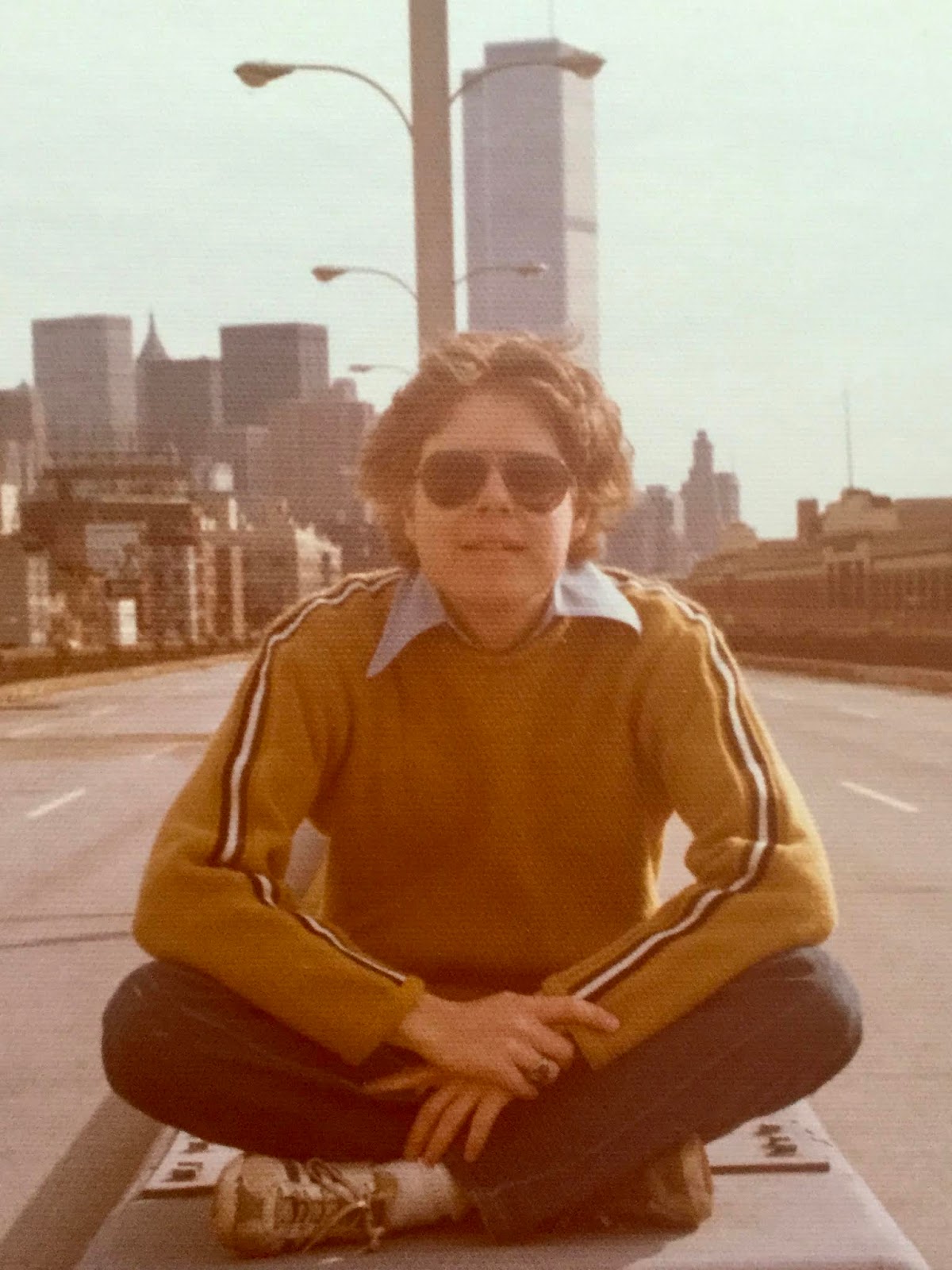
I visited the area on my bike shortly before graduation from college.  The World Trade Center loomed to the south, the only downtown symbol of modernity. Anyone cool sneered at the domineering twin phalluses.  The carless, elevated highway eventually went the way of the piers.


Rollerblades hadn't been invented and Baltrop, like everybody else, worshipped beer swilling, macho men.


The gallery next door documents a different scene and culture just ten miles north of Manhattan but a world away.  Going from the Baltrop exhibit, which showcases the work of a native son of the Bronx, to one that documents the birth of graffiti in the same borough, is like moving from a hushed tomb (or maybe a back room?) to a theme park.  As much as I enjoyed both, they made me wonder what the Baltrop exhibit might have looked like if he had had the resources of Henry Chalfant who clearly had a hand in mounting his.  Whether intentionally or not, the Bronx Museum illustrates the impact of white privilege on an artist's work, past and present.

The Chalfant exhibit recreates a subway yard in the south Bronx.


Graffiti images shot by Chalfant, whose wife Kathleen is a well-regarded actress, appear on sheets of cloth as long as actual subway cars.


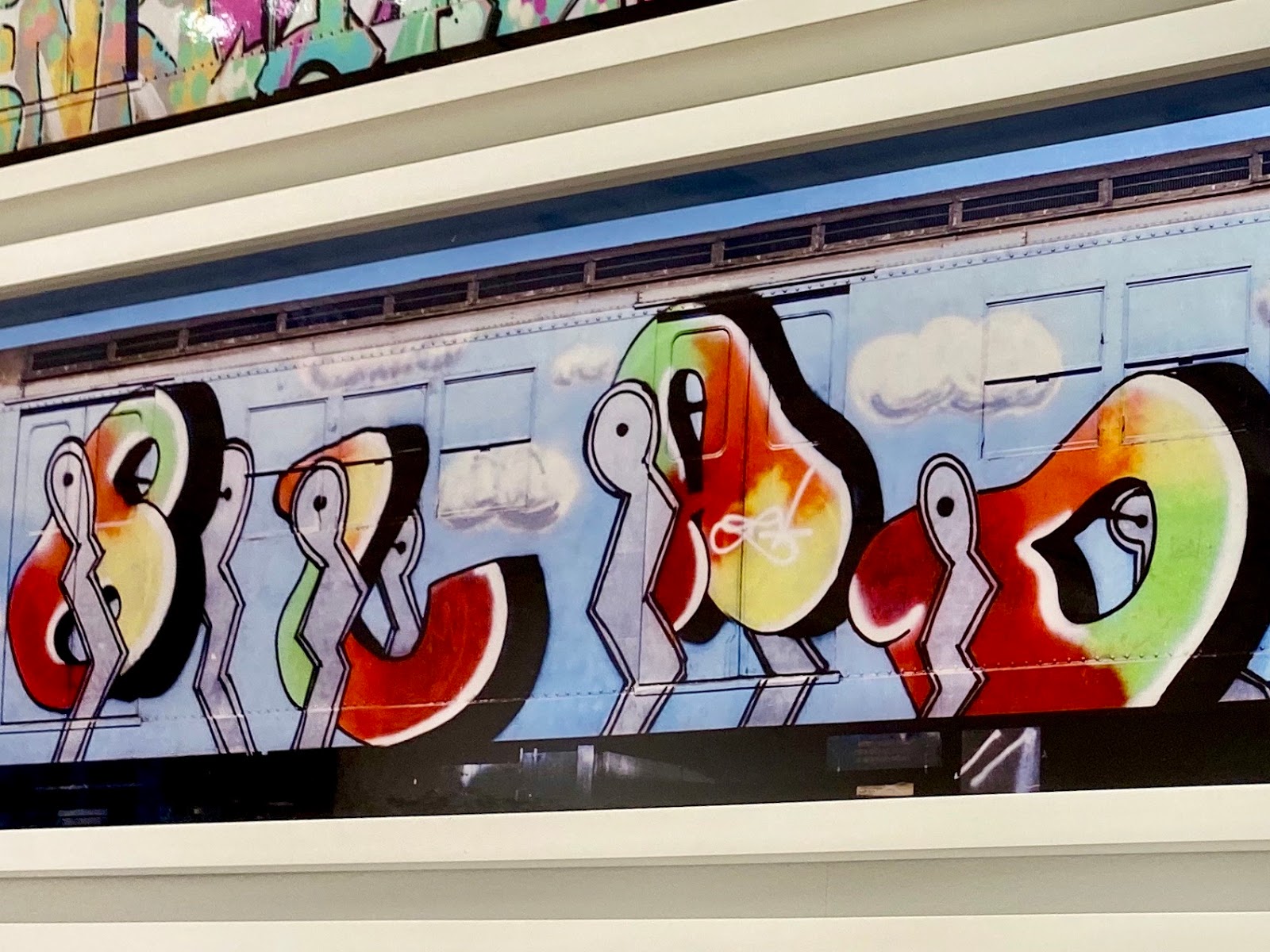
Chalfant's original photos, beautifully framed and mounted, hang in a nearby room.  He shot five images of a single, stopped car from a bridge with the sun behind him and later spliced them together in his studio.  No "panorama" mode on cameras, then!  He had to work fast because the MTA washed off the graffiti as quickly as it could.


Some taggers, as graffiti artists were known, spoofed pop art while others created their own signatures, literally and figuratively.


The Bronx museum also provides a facsimile of the Soho studio where Chalfant printed and assembled his work.  His "open-door" policy for taggers helped "some weird white guy" gain their trust.  Altrop, by contrast, had only a couple of cameras and needed food stamps to survive, even with veteran benefits.


Chalfant, not quite a decade older than Altrop, partied with the taggers, too.  Here, Madonna gets down with Crazy Legs at Danceteria.  Those were the days!


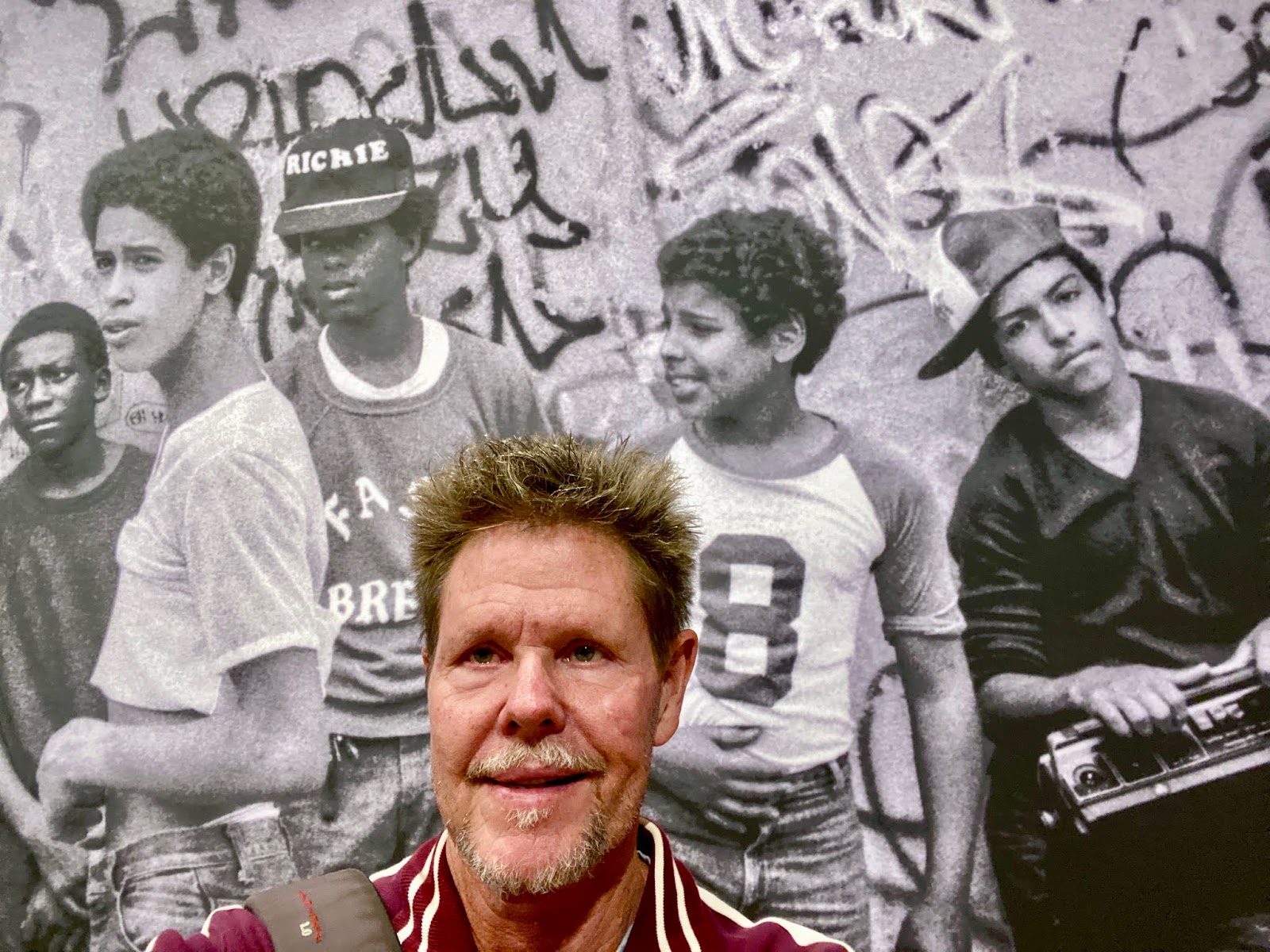
When Chalfant froze this group of taggers in time (including Crazy Legs, 2nd from the left), I wasn't much older than they were.  


Chalfant also caught the movement of graffiti from the subway to the streets.


Look no further than the Grand Concourse, just outside, to find some today.


Time erases street art, too, but digital photography makes it a lot easier to preserve.