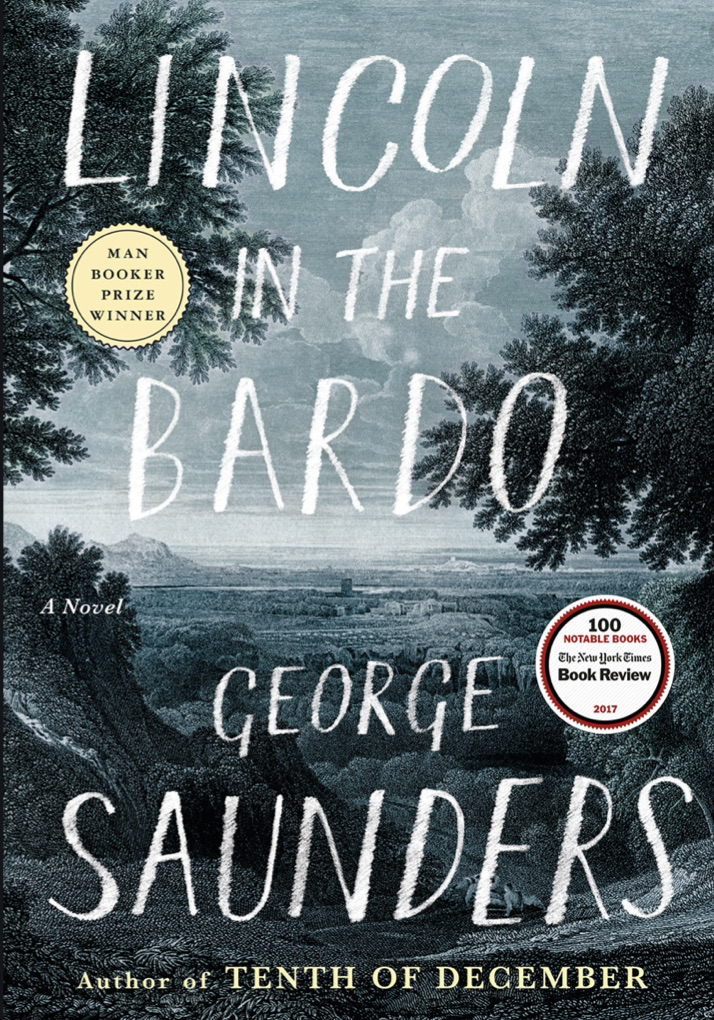
I found Undine Spragg despicable from the get go, but I kept turning the pages as eager for the singular beauty's comeuppance as Edith Wharton's often sharply funny dissection of American and European values. So little has changed in the century since the publication of her thoroughly engrossing novel about social climbing on two continents.
Even more surprising, I found myself indefatigably copying passage after passage of her glorious prose.
. . . what Popple [a portraitist] called society was really just like the house it lived in: a muddle of misapplied ornament over a thin shell of utility. The steel shell was built up in Wall Street, the social trimmings were hastily added in Fifth Avenue; and the union between them was as monstrous and factitious, as unlike the gradual homogenous growth which flowers into what other countries know as society, as that between the Blois gargoyles on Peter Van Degen‘s roof and the skeleton walls supporting them.
* * * *
“Politics,” to Undine, have always been like a kind of back-kitchen to business —the place where the refuse was thrown and the doubtful messes were brewed. As a drawing room topic, and one to provoke disinterested sentiments, it had the hollowness of Fourth of July orations, and her mind wandered in spite of the desire to appear informed and competent.
* * * * *
We might as well cast Undine as a "Real Housewife of the Gilded Age." Or maybe it's one of the Kardashians who's channelling HER.
Her mind was as destitute of beauty and mystery as the prairie school house in which she had been educated; and her ideals seem to Ralph [her high society husband] as pathetic as the ornaments made of corks and cigar bands with which her infant hands had been taught to adorn it. He was beginning to understand this and learning to adapt himself to the narrow compass of her experience. The task of opening new windows in her mind was inspiring enough to give him infinite patience; and he would not yet own to himself that her pliancy and variety were imitative rather than spontaneous.
* * * *
Wharton uses Charles Bowen, a minor character, to carry messages back and forth from the European salons that Undine eventually frequents to Washington Square, the stuffy milieu of her first success, a place where family jewels are gussied up in "blue Tiff'ny boxes" when presented as gifts. His acute perceptions read like those of a gay man (Wharton and Henry James were good friends) and his frank conversation with Ralph's sister directly addresses the titular theme of Wharton's novel.
“She may know nothing about his business; but she must know it’s her extravagance that’s forced him into it.” Mrs. Fairford looked at Bowen reproachfully. “You talk as if you were on her side!“
“Are there sides already? If so, I want to look down on them impartially from the heights of pure speculation. I want to get a general view of the whole problem of American marriages.“
Mrs. Fairford dropped into her arm chair with a sigh. “If that’s what you want you must make haste! Most of them don’t last long enough to be classified.“
“I grant you it takes an active mind. But the weak point is so frequently the same that after a time one knows where to look for it.“
“What do you call the weak point?“
He paused. “The fact that the average American looks down on his wife.“
Mrs. Fairford was up with a spring. “If that’s where paradox land you!“
Bowen mildly stood his ground. “Well—doesn’t he prove it? How much does he let her share in the real business of life? How much does he rely on her judgment and help in the conduct of serious affairs? Take Ralph for instance—you say his wife’s extravagance forces him to work too hard; but that’s not what’s wrong. It’s normal for a man to work hard for a woman—what’s abnormal is his not caring to tell her anything about it.”
“To tell Undine? She’d be bored to death if he did!“
“Just so; she’d even feel aggrieved. But why? Because it’s against the custom of the country. And who’s fault is that? The man’s again—I don’t mean Ralph I mean the genus he belongs to you; homo sapiens, Americanus. Why haven’t we taught our women to take an interest in our work? Simply because we don’t take enough interest in THEM!”
Mrs. Fairford, sinking back into her chair, sat gazing at the vertiginous deaths above which his thoughts seem to dangle her.
“YOU don’t?” The American man doesn’t—the most slaving, self-effacing, soft sacrificing—?”
“Yes; and the most indifferent: there’s the point. The ‘slaving’s’ no argument against the indifference. To slave for women is part of the old American tradition; lots of people give their lives for dogmas they’ve ceased to believe in. Then again in this country the passion for making money has preceded the knowing how to spend it, and the American man lavishes his fortune on his wife because he doesn’t know what else to do with it.“
“Then you call it a mere want of imagination for a man to spend his money on his wife?“
“Not necessarily – but it’s a want of imagination to fancy it’s all he owes her. Look about you and you’ll see what I mean. Why does the European woman interest herself so much more and what the men are doing? Because she’s so important to them that they make it worth her while! She’s not a parenthesis, as she is here – she’s in the very middle of the picture. I’m not implying that Ralph isn’t interested in his wife--he’s a passionate a pathetic exception. But even he has to conform to an environment where all the romantic values are reversed. Where does the real life of most American men lie? In some woman’s drawing room or in their offices? The answer is obvious isn’t it? The emotional center of gravity‘s not the same in the two hemispheres. In the effete societies it's love, in our new one it’s business. In America the real crime passionel is a ‘big steal’—there’s more excitement in wrecking railways than homes.”
* * * *
Undine's unremitting avariciousness means she must ply her instinctive wiles overseas, among the calcified European aristocracy where real money is also in short supply. We see her French husband, a nobleman, for the first time through Bowen's Francophile eyes.
Bowen liked him as a companion and admired him as a charming specimen of the Frenchman of his class, embodying in his lean, fatigued and finished person that happy mean of simplicity and intelligence of which no other race has found the secret. If Raymond de Chelles had been English he would have been a mere fox hunting animal with appetites but without tastes; but in his lighter Gallic clay the wholesome territorial savour, the inherited passion for sport and agriculture, were blent with an openness to finer sensations, a sense of the come-and-go of ideas, under which one felt the tight hold of two or three inherited notions, religious political, and domestic, in total contradiction to his surface attitude. That the inherited notions would in the end prevail, everything in his appearance declared from the distinguished slant of his nose to the narrow forehead under his thinning hair; he was the kind of man who would inevitably “revert” when he married. But meanwhile the surface he presented to the play of life was broad enough to take in the fantastic spectacle of the Noveau Luxe; and to see its gestures reflected in a Latin consciousness was an endless entertainment to Bowen.
* * * *
Undine's selfishness forces her upper class husbands into situations they both find appalling. First Ralph, the sympathetic and well-born weakling who fathers Undine's only child, gives up his dreams of writing poetry to go into the . . . real estate business. There he encounters wheelers and dealers like Elmer Moffat, another of Undine's suitors, whose "epic effrontery" characterizes the archetypal American self-made man.
That was the Wall Street code: it all “boiled down“ to the personal obligation, to the salt eaten in the enemy’s tent. Ralph’s fancy wandered off on a long trail of speculation from which he was pulled back with a jerk by the need of immediate action. Moffatt’s “deal“ could not wait: quick decisions were essential to effective action, and brooding over ethical shades of difference might work more ill than good in a world committed to swift adjustments. The arrival of several unforeseen bills confirmed this view, and once Ralph had adopted it he began to take a detached interest in the affair.
* * * *
Later, Undine finally crosses a line in the sand drawn by her French husband when she tries to arrange the sale of tapestries that have been hanging in his family's damp, drafty chateau for centuries, provoking this tirade:
“And you’re all alike,” [de Chelles] exclaimed, “everyone of you. You come among us from a country we don’t know, and can’t imagine, a country you care for so little that before you’ve been a day in ours, you’ve forgotten the very house you were born in— if it wasn’t torn down before you knew it! You come among us speaking our language and not knowing what we mean; wanting the things we want, and not knowing why we want them; aping our weaknesses, exaggerating or follies, ignoring or ridiculing all we care about— you come from hotels as big as towns, and from towns as flimsy as paper, where the streets haven’t had time to be named, and the buildings are demolished before they’re dry, and the people are as proud of changing as we are of holding to what we have—and we’re fools enough to imagine that because you copy our ways and pick up our slang you understand anything about the things that make life decent and honorable for us!“
Undine eventually comes full circle, but just when she thinks she's got all the money she wants--or more to the point--thinks she deserves, Wharton pulls the Oriental rug out from under her with a twist that does date her novel.
Other random tidbits:
“. . . and they say shipwrecked fellows’ll make a meal of a friend as quick as they would a total stranger.”
* * * *
“Divorce without a lover? Why, it’s—it’s as unnatural as getting drunk on lemonade.”
* * * *
The Duchess certainly looked like a ruin; but Undine now saw that she looked like the ruin of a castle.
* * * *
He seemed to be stumbling about in his inherited prejudices like a modern man in medieval armor.
* * * *
Her entrances were always triumphs; but they had no sequel. As soon as people began to talk they ceased to see her.