I almost missed it. If the Museo del Novocento had been open on Mondays as indicated on the website, I wouldn't have gone to the Biblioteca Pinacoteca Ambrosiana where Gianni Versace supposedly found the inspiration for his Medusa logo, at least according to the guard who was otherwise unable to help identify the striking bust.

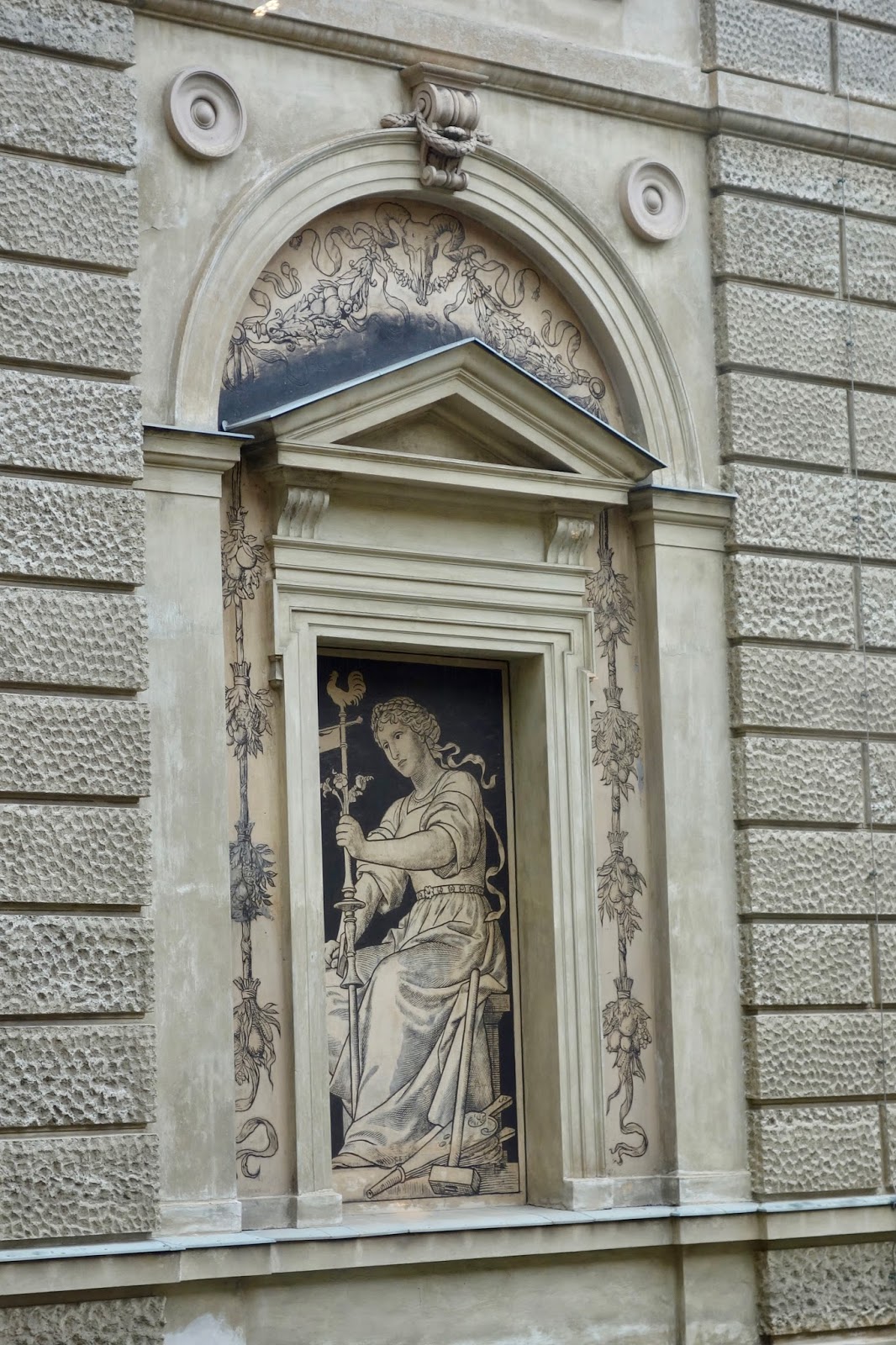
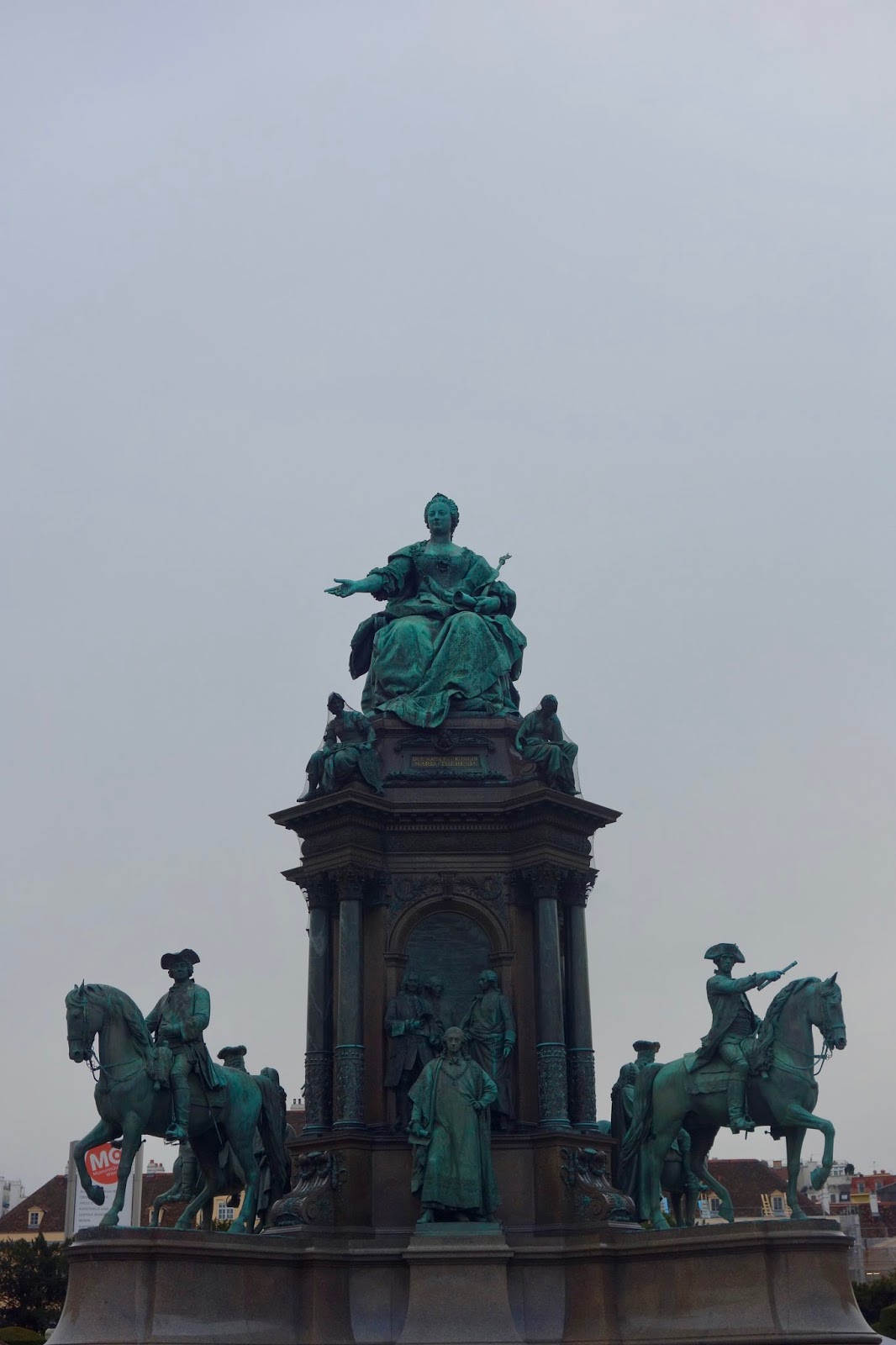
Visitors exit through the back door where a statue honors Cardinal Federico Borromeo who established the library early in the 17th century to encourage Counter-Reformation scholarship.

The library was one of the first in Europe to open its doors to the public. Cardinal Borromeo, also known for his acts of charity, exhibited his personal art collection in an adjoining building he had constructed for that purpose. He and the subsequent curators of the museum certainly had an eye for talented expression of religious devotion.
 |
| "Madonna of the Pavilion" by Botticelli (15th century) |
 |
| Saints Peter Martyr & Christopher by Ambrogio Bergognone (15th century) |
 |
| Saint Sebastian by Bartolomeo Vivarini (15th century) |
 |
| "The Resurrection of Christ" by Girolamo da Cotignola (16th century) |
 |
| "The Infant Jesus with a Lamb" by Bernardino Luini (early 16th century) |
 |
| "The Head of John the Baptist" (Lombard painter, early 16th century) |
 |
| "Head of St. John the Baptist" by Antonio Solario (late 15th-early 16th centuries) |
Who knew that preliminary sketches got this big? The Vatican commissioned Raphael to paint "The School of Athens," a fresco to decorate the rooms of the Apostolic Palace in Rome. Plato and Aristotle are faintly visible at the top of the stairs, surrounded by a Who's Who of ancient Greece (and geometry class). Leonardo da Vinci served as the model for Plato, one of several "cameos" by Raphael's Renaissance peers.

More than a few works by Jan Brueghel, one of my favorite painters, came as a welcome surprise. It appears that Cardinal Borromeo was a fanboy, too.
 |
| "Allegory of Water" (late 15th-early 16th centuries) |
 |
| "Vase of Flowers with Jewel, Coins and Shells" (late 15th-early 16th centuries) |
 |
| "Mouse with Roses" (late 15th-early 16th centuries) |
 |
| "Daniel in the Lions' Den" (late 15th-early 16th centuries) |
Secular stained glass windows illuminate the room that houses the Medusa bust.

Statues line the interior courtyard.

Now this is what I would call a GRAND staircase. Don't tell the Instagrammers!

Palm trees were as an important a decorating motif at the Biblioteca Pinacoteca Ambrosiana


. . . as they are at the Folly.


Sometimes when you discover someone new, he appears to be everywhere you look afterward.
 |
| Self Portrait by Antonio Canova (late 18th-early 19th centuries) |
Da Vinci is well represented in the collection.
 |
| "Portrait of a Musician" by Leonardo da Vinci (late 15th-early 16th centuries) |
Pages from the Codex Atlanticus, his twelve-volume set of scientific drawings and writings from 1478 to 1519, are on illuminated display.


My ticket also included admission to the Crypt of San Sepolcro, constructed more than a thousand years ago as a repository for soil brought back by victorious Christians from the Crusades.

A later member of the Borromeo clan, Charles, used it as the "gymnasium of the Holy Spirit" while he was Archbishop of Milan. I'm pretty sure I would have been more simpatico with Federico.

He started to renovate it, too, with the construction of 24 chapels illustrated with frescoes depicting the Passion, a project that never was completed.

Oliviero Rainaldi created "Ambrosian Shroud," a site-specific, backlit marble sculpture for the crypt in 2025.

More Northern Italy
Florence
Bologna
Venice