Wednesday, April 17, 2024

"Gorgeous" Times Four

After more than five seasons, the Folly is looking pretty good.  Inside, at least.  We re-painted last year.


The addition of our electric chariot crowded Delia's cozy carport, but proved to be a house game changer with four passenger seats instead of just one.


We celebrated its early March arrival at the Colony Hotel's gay night in Palm Beach.  Most of the patrons weren't much younger than the cost of three cocktails:  80 bucks!  


Too bad my dressed-to-kill housemates forgot their pocket squares, the evening's de rigueur accessory.  


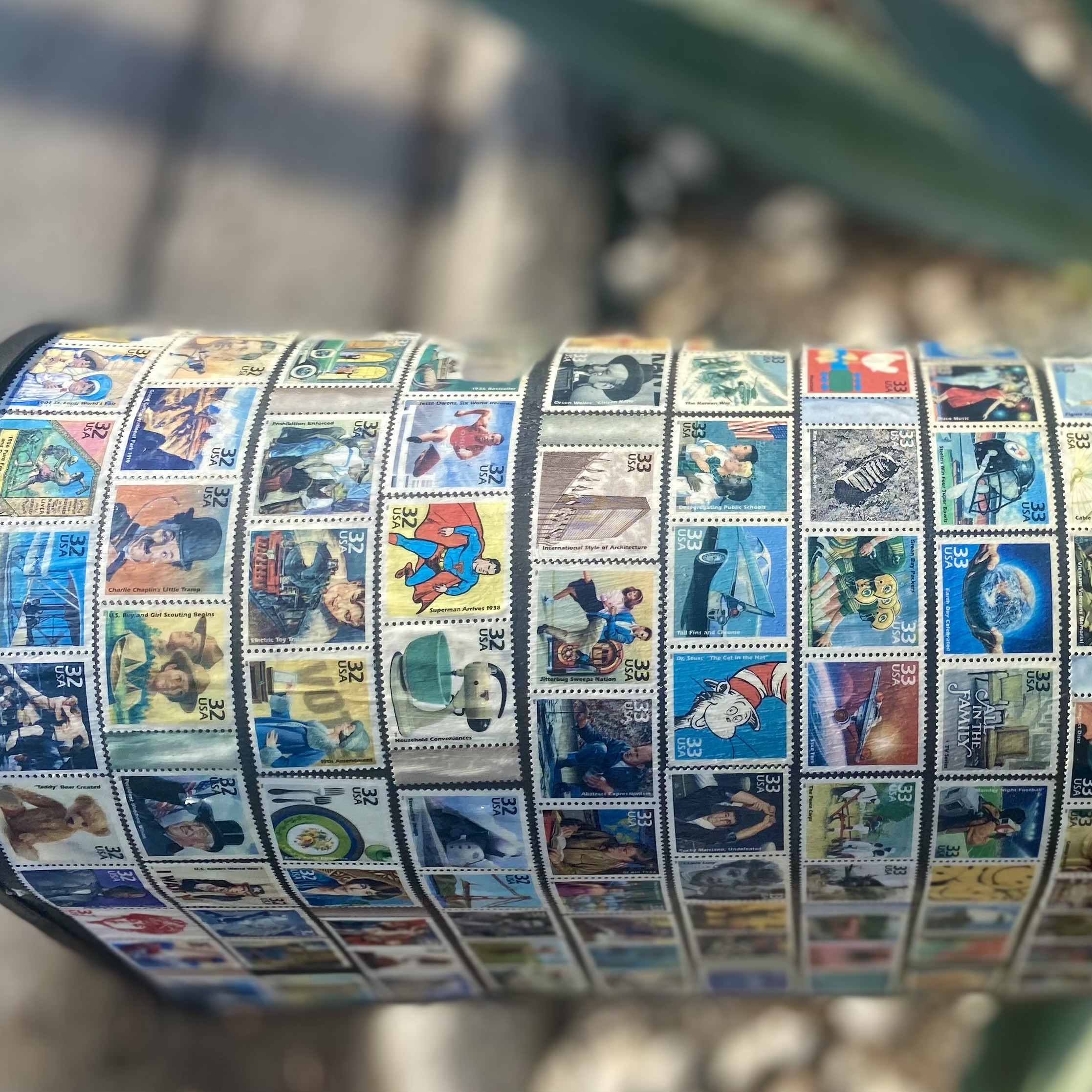
The Folly now boasts the kind of decorative mailbox that makes Lake Worth Beach so distinctive.  I collaged it with stamps the Post Office issued to commemorate the 20th century.  Unfortunately, the intense Florida sun already has begun to bleach these cultural, political, social and scientific reminders of my first 50 years.


Each row represents a decade.  I ordered the '80s and '90s online.

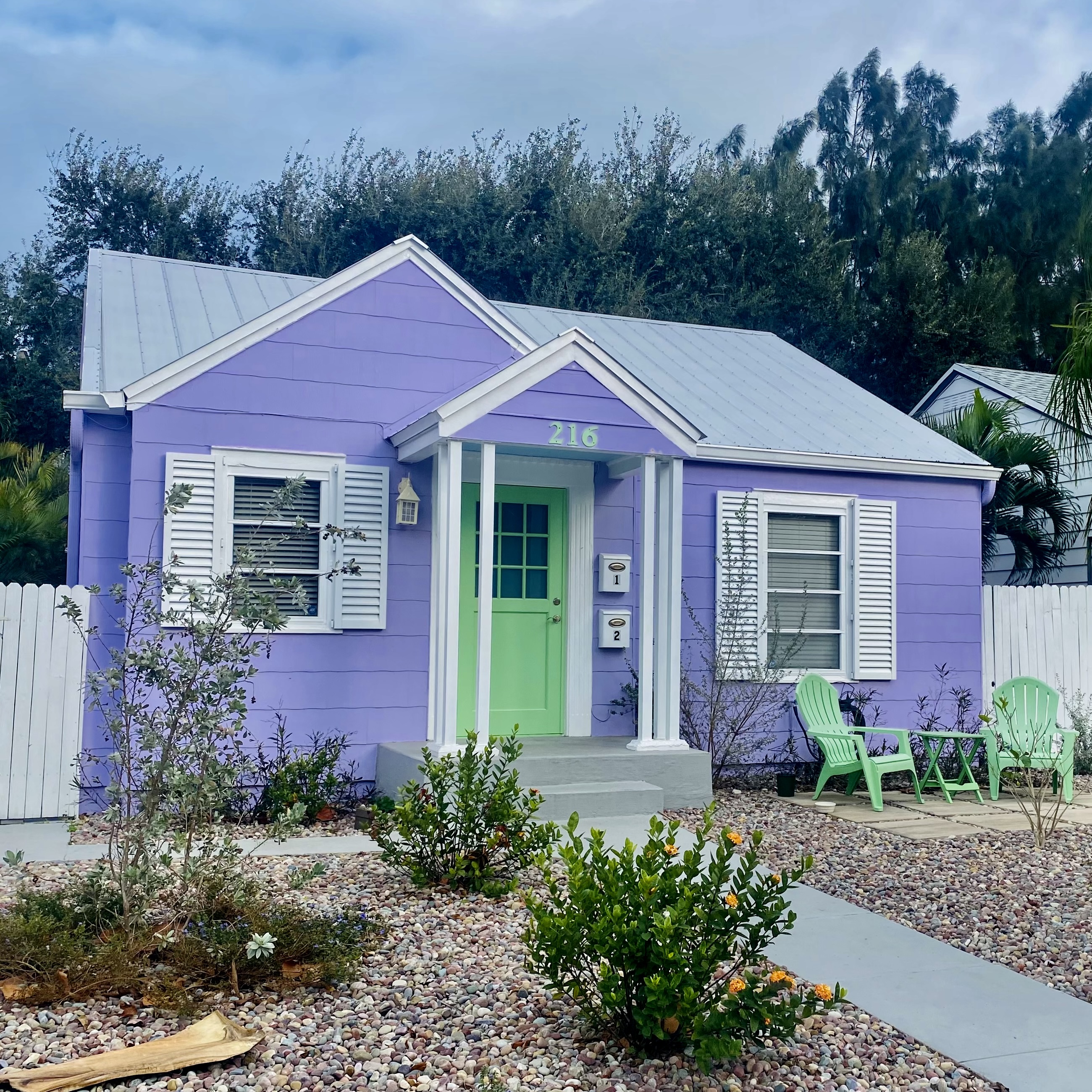
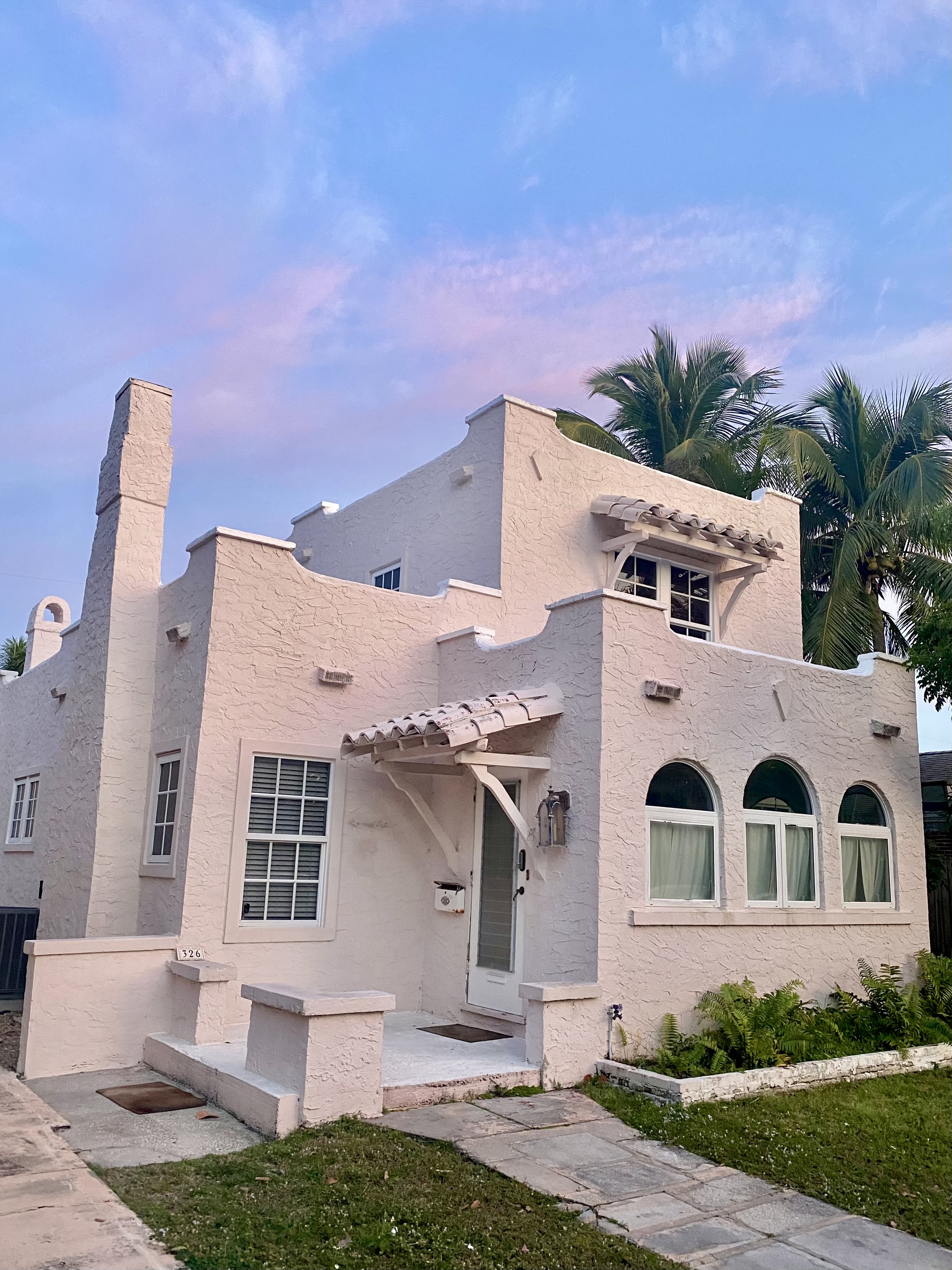
Maybe it was turning 70 and the settled feel of post-pandemic life, but I enjoyed my time at the Folly more than in years past and tried harder to appreciate Lake Worth's funky architecture and landscaping.  Is that hearse parked next to the vintage store sending a message?


Anticipation of my only new automobile purchase is reflected in several photos, if not my color choice.  


We definitely live in a low-key, peaceful community


. . . where residents spend a lot of time fishing, golfing 


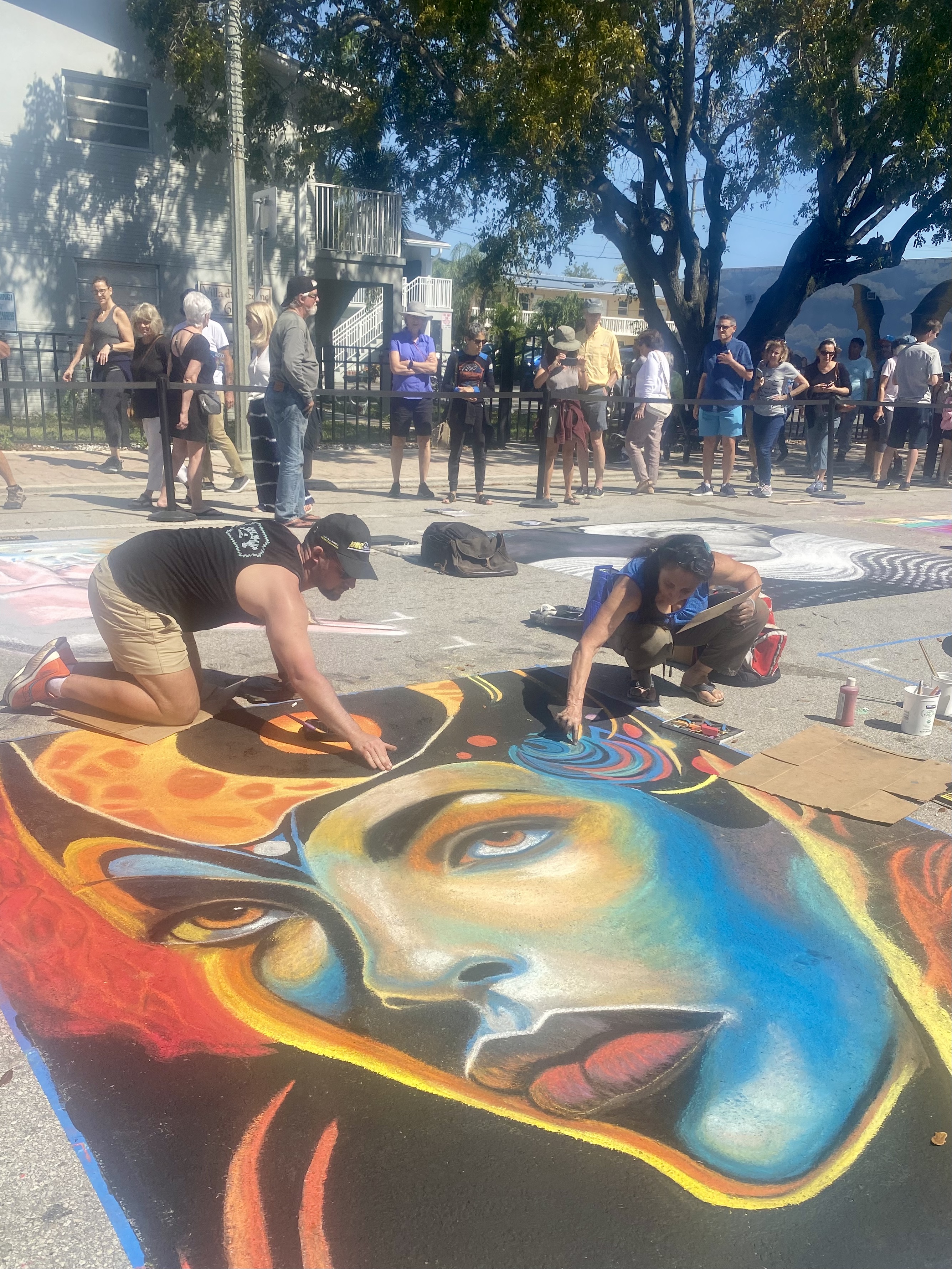
. . . and street painting.

The Folly's cinderblock walls made it the perfect place to host a 9 Carman reunion.  See what Paul, the Jeffs and Henry looked like in 1975.


There were several outings, too, even before the arrival of the chariot, thanks to Steven, Thom & Christine.
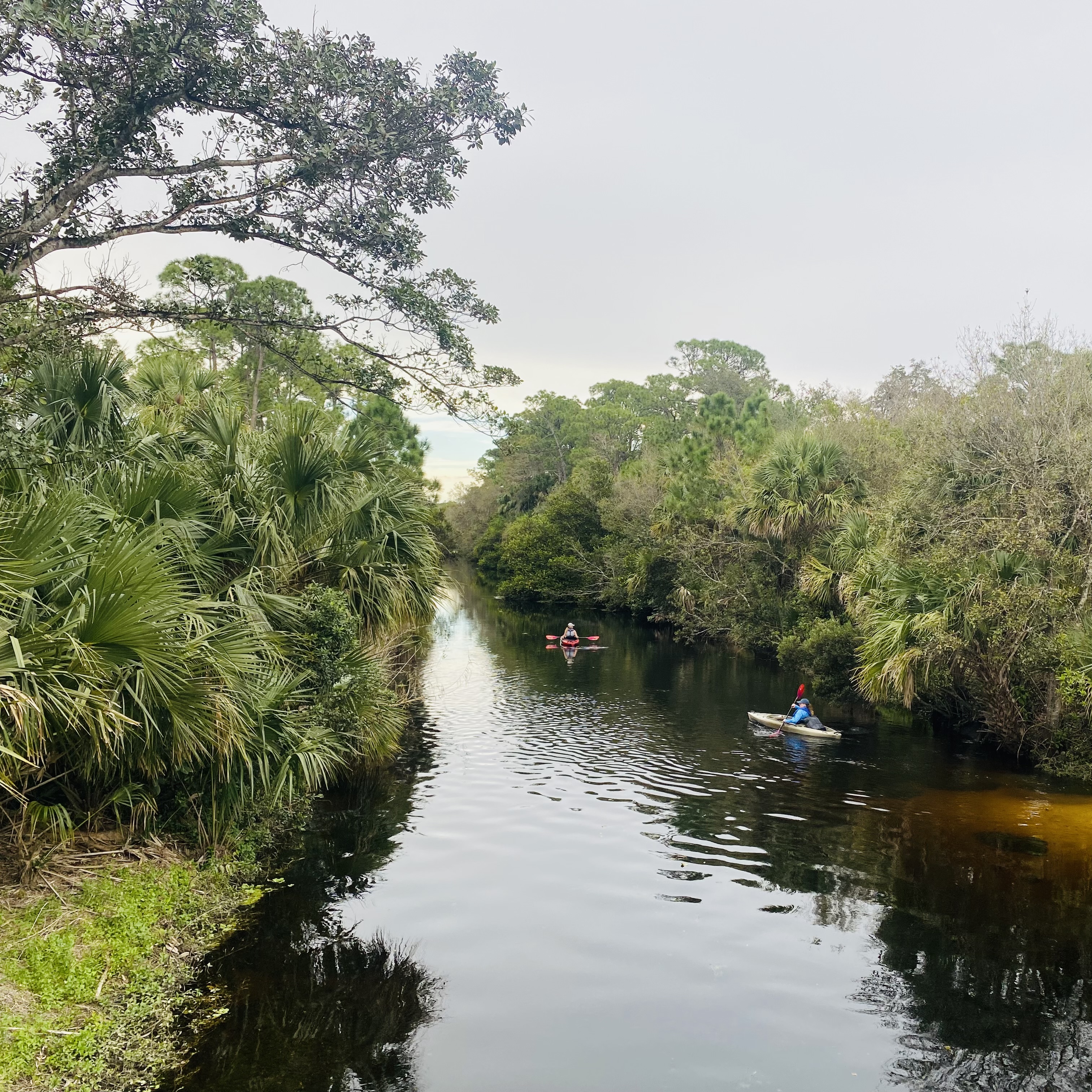
Riverbend Park, Jupiter
The Bass Museum, Miami
The Manatee Lagoon, Riviera Beach
Holocaust Memorial, Miami
The Bunker, West Palm Beach
Wynwood, Miami
En Route to MacArthur Park
We certainly ate well, including a couple of delicious meals at Oceano Kitchen which relocated from Lantana to Lake Worth.  Small plates, big taste.  But chef:  please bring back the pizza oven!


We dined outside every chance we got at the Folly.


I added a new dish to my limited repertoire:  roasted peppers with chickpeas and goat cheese, a tasty accompaniment to salmon, our most frequent entree.


Chris turned Thom and I onto tofu


. . . if not the clean up, which joined my collection of abstract photos.


These came in pretty handy during two of the most intense deluges I've ever experienced.


It looks like the lizards at the Folly have been checking out the Kama Sutra.


An orchid we bought in 2021 bloomed extravagantly, perhaps because of all the autumn rain that Chris endured.


A neighbor's flame vine was no shrinking violet, either.


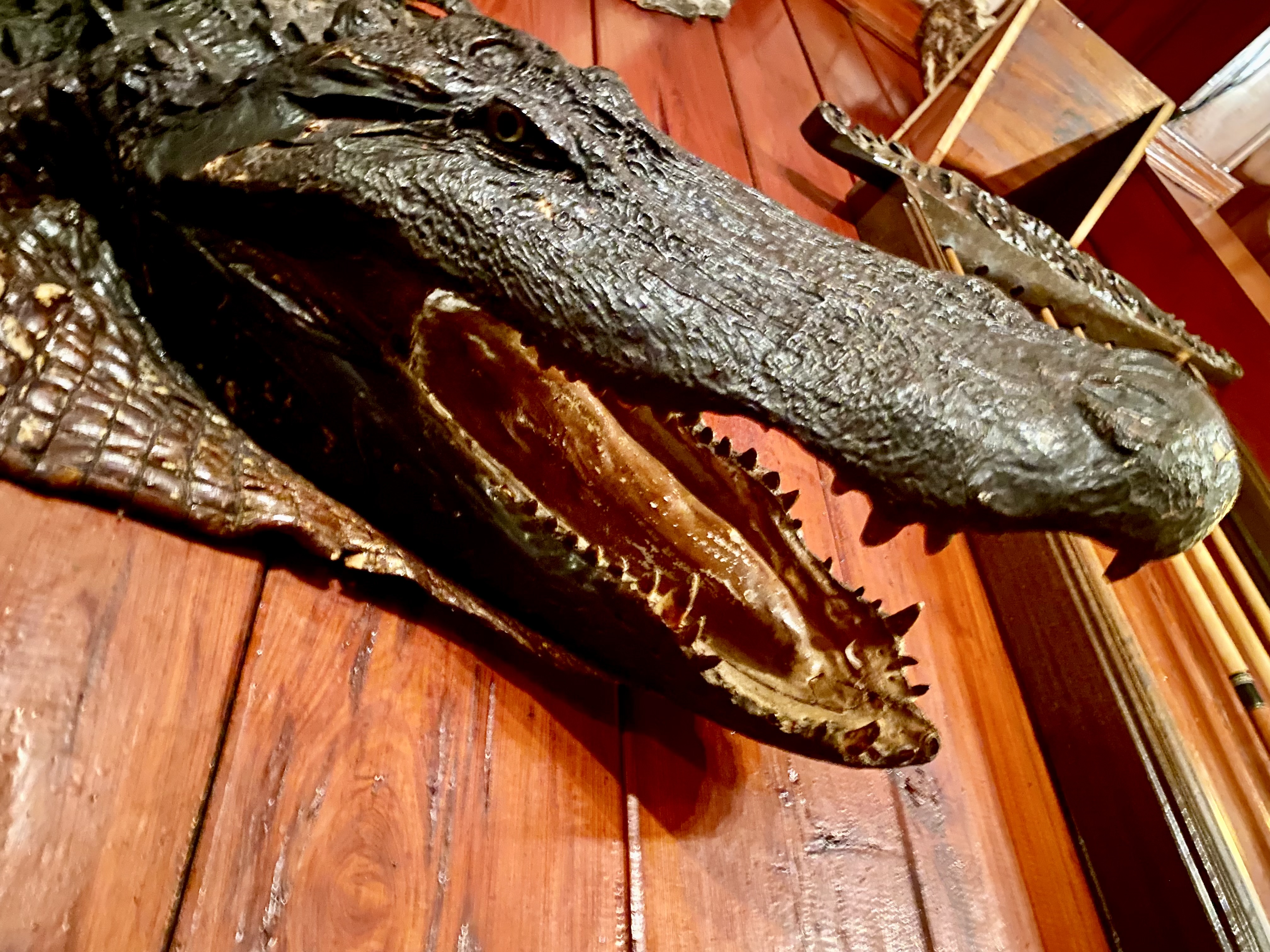
Casual birdwatching continues to delight.  Thom saw an alligator in Lake Osborne, too.


To extend my range, I biked several miles both north and south on A1A before beginning long beach walks.  I'll bet few snowbirds have walked the eleven miles from the clock tower on Worth Avenue to the Boynton Pier.  Many people aren't even aware that you can do so because they mistakenly believe you're trespassing on private land.  Not true according to Florida law.


Remnants of old docks or piers can do real bodily damage when submerged.


Much of the beach only can be walked at low tide while exercising your white privilege.  No one ever has stopped me, not even in front of Mar a Lago.
  

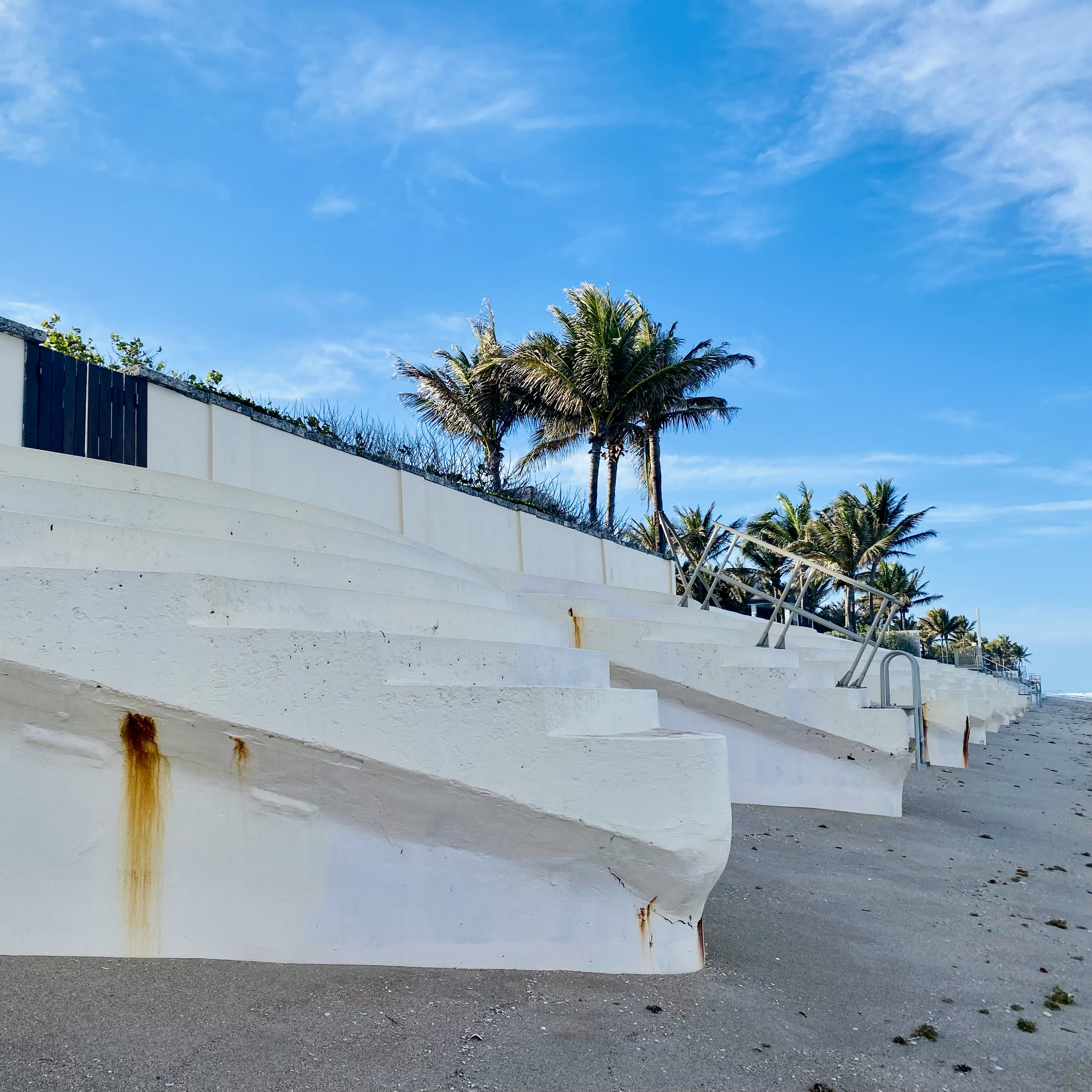
Some of the bulkheads seem more like stadium seating where you'll be able to watch the Atlantic swallow the overbuilt barrier island.  Make your reservations now to watch the one percent go down.


Fewer beachcombers means better shelling.


Steven, who flew down early for a reverse-positioning cruise he and Chris were taking to Portugal out of Ft. Lauderdale, inaugurated our new sofa bed.   We drove the chariot to the Apple store in Wellington where I bought a new i-Phone and we tried on the Apple Vision Pro goggles.  I'm not convinced.


Although we didn't party as much as recently retired Steven would have liked ("It's hard to get you guys to go ANYWHERE!"), we did have a fun night before saying "bon voyage."  Ava served us happy hour cocktails at the Library and, after dining at Oceano Kitchen, 


. . .  we made our debut at Lake Worth's sole gay bar.  As we entered, a Latina trans woman pointed at each of us and pronounced "gorgeous, gorgeous, gorgeous, gorgeous," proving that even old meat can be fresh in the right context. 


What a sweet way to end the joint season!  Thom will hang on another month.


Monday, April 15, 2024

Faith Ringgold (1930 - 2024)


Self Portrait (1965)
I can fly — yes, fly.  Me, Cassie Louise Lightfoot, only eight years old and in the third grade, and I can fly. That means I am free to go wherever I want for the rest of my life.

Faith Ringgold wrote those words in a children's book adapted from one of her signature quilts, "Tar Beach."  While she taught public school art classes in the Bronx, white men hogged the art world spotlight.  Rarely have I been as gobsmacked by an exhibit as her New Museum retrospective in 2022.  At least she lived to see it.

What she managed to do, in those early paintings,  writes New York Times critic Holland Carter, was put aside all the conventional art tools she’d been schooled with, beauty among them (she would later reclaim it), in order to face down the world as it really was, including an art world that had no use for her — a Black woman — and was, in fact, fortressed to keep her and everyone like her out.

Certain artists manage to leap over walls. Picasso was one. And some tunnel under those walls, hit resistance, tunnel some more and, once inside, open a door to let others in. That’s what Faith Ringgold, artist-activist to the end, did.

"The Ascendants XXIV (Tea O'Clock with Neel's Ringgold II)
by Wangari Mathenge (2023)

More Faith Ringgold:


Saturday, April 6, 2024

Reel Florida

Everglades City, 45 minutes southeast of Naples, gives you a taste of what I like to think of as the "reel" Florida, the state where my grandfather retired to fish in the mid 1950s.  No high rise condos or traffic jams or Tesla superchargers here, although an incongruous gorilla sculpture did greet us at a non-branded fast food A-frame.


A woman I met in Delnor Wiggins Pass State Park recommended that we dine at the historic Rod & Gun Club.  The name made Chris and Thom doubt our welcome, but when in Rome do as Romans, I cajoled.  Folks live in this neck of the woods--which consistently floods during hurricanes--to fish and hunt.  They also serve delicious meals: potent cocktails, excellent blackened scallops and too-die-for biscuits, with a pretty, screened-in patio view, enhanced by the smoke from a controlled burn we passed earlier.

The kitsch level of the club's interior, which also offers accommodations, is off-the-charts, too, but don't expect to make an online reservation.


The former Bank of Everglades, probably the tallest structure in town, will soon re-open as an information center. 


We stayed at the not-inexpensive River Wilderness Waterfront Villas where I watched the day dawn from a plastic chaise lounge, wrapped in a blanket and eating imported banana bread.


A trickle charge cadged from a standard electrical outlet in the parking bay helped the chariot get us back to the Folly without stopping after a full day of activity.

More than 90% of the stone crabs you find on seafood menus are trapped in local waters.

Grimm's is one of the nation's biggest distributors.  They sourced my scallops, too.

Did you know there are 10,000 islands on Florida's southwest coast?  Many tourists see them from airboats.


Having already done the airboat thing during the pandemic,  we opted for a larger vessel belonging to Everglades National Park Adventures.  It took us past the Rod & Gun Club which looks a lot more impressive from the water.


Inhabiting one of these "villas" during a hurricane might be more waterlogged than picturesque. 


Here's the only remaining sign to indicate the water boundaries of Everglades National Park. Hurricanes have blown all the others away.


Our guide suggesting using video mode to capture dolphins surfacing near the boat and then getting a screen shot of the moment afterward.  Great tip!


This pelican seemed to be enjoying the unusually cool and dry weather as much as we were.


Two names will become familiar even if you spend less than 24 hours in Everglades City. Barron G. Collier, a Tennessean who loved sports fishing, is to the southwest coast of Florida what Henry Flagler, his mentor, was to the east.   He parlayed his street car advertising fortune--made by age 26!--into Florida's most extensive private real estate holdings before exerting a powerful influence on the area's development, including the construction of the Tamiami Trail, a road that linked Tampa to Miami, and federal protection of America's largest subtropical wilderness. Hosting presidents at the Rod & Gun Club helped him secure these goals; Harry Truman dedicated the national park in 1946, just a month after Marjory Stoneman Douglas published The Everglades: River of Grass.


When he wasn't fishing, or whittling fish, local boy Rob Storter kept illustrated journals detailing his long life.  I bought a copy of Crackers in the Glade: Life and Times in the Old Everglades as a souvenir.


It sounds a little bit like Eden.  With lots of hurricanes and even more critters.


The charming (and free!) Museum of the Everglades started out as a commercial laundry.


After the Tamiami Trail made the Everglades accessible to motorists, Collier established the Southwest Mounted Police to patrol 100 miles of the new highway on Harley Davidsons in uniforms inspired by their Canadian brethren.  "Collier's Cavalry" eventually became the Florida Highway Patrol which I'm pretty sure ticketed my father in a speed trap during a family vacation in the late1950s.  After visiting my grandparents in Daytona Beach, we had driven to Miami and were taking the Tamiami Trail north in our tiny black Karmann Ghia when a motorcycle cop pulled us over.  He wouldn't let us continue on our way until we paid the fine the next morning.  Ken was plenty steamed, let me tell you!


After lunch, we crossed the bridge to Chokoloskee Island which was inhabited by the indigenous Calusa people for more than a millennium prior to European settlement.  Many of the 10,000 islands are built upon the oyster shelters they deposited for fishing purposes. Ted Smallwood, the community's first postman--mail was delivered by boat from the Keys before the construction of the Tamiami Trail--opened a general store that his granddaughters have turned into a frozen-in-time museum.


No wonder Susie is scowling.  The US Army bivouacked on the island during the Third Seminole War.

Susie Billie, "Shaman of the Seminole Nation"
by Camille Brock Baumgartner (1993)


This display of internal combustion engine parts did not make me as nostalgic as the soda pop bottles or sewing implements.


Here's the equipment that makes Florida reel.

En route home, we passed the nation's smallest post office--which delivers mail to the Seminole and Miccosukee tribal lands AND sells Trailways bus tickets--in Ochopee.  It has been in continuous operation as long as I have.

Friday, April 5, 2024

Afternoon in Naples

Chris, Thom and I made a quick visit to the Gulf Coast of Florida before the Folly season ended.  We drove due west on Alligator Alley, where a new visitor's center will offer elevated views of the sea of grass in the Everglades.

Chris had a lunch date with old friends of his family, so Thom and I explored Fifth Avenue South, surely the most manicured shopping district in the United States.  In spite of Hurricane Ian, it hadn't changed much since Christine and I walked it eight springs ago.


The cars, like the majority-white residents, are often vintage.  It's not often that auto paint matches my turquoise outfit.

Florida's foliage doesn't get prettier than this in April with the tabebuia trees in full bloom. Over the next 24 hours we would be seeing a lot of palm and cypress trees, too.


We drove 30 minutes north to Delnor-Wiggins Pass State Park.  Thom sunned while I explored.


I used a Tesla charging station for the first time.  Easy peasy, and free, too, at least for the first 5,000 miles!  In 35 minutes, we were on the road to Everglades City.

Tuesday, April 2, 2024

Fellow Travelers (5+*)


How could I have waited nearly two decades before reading this fully realized, you-are-there account of the McCarthy era, first published in 2006 and recently resurrected by a Showtime adaptation which I'm now afraid to watch because I know it can't possibly compare despite the undeniable allure of Bomer and Bailey beefcake?  

Fellow Travelers takes place when the Cold War was still hot and a 20something Roy Cohn lusted after a blond heir whose family placed his self-penned anti-communist tract right next to the Gideons bibles in the nightstands of their chain hotel rooms.  Come to think of it, that's a pretty good metaphor for Thomas Mallon's remarkably detailed examination of Catholic guilt, politics and federalized homophobia, animated by no less than a captivating and believable story of gay puppy love inside the Beltway. 

Tim, a Hell's Kitchen transplant interning at the Washington Star, falls hard for Hawk, the State Department's most eligible and apolitical bachelor, who, as his name implies, likes 'em young.  Hawk calls the milk-loving kid Skippy and uses his connections to get him a job on the Hill working for a Michigan Senator, a legless WWII vet nicknamed "Canes."  (Yep, he was real.  Mallon brings major and minor historical figures on and off stage so briskly that multiple detours to Wikipedia enhance the book immeasurably).  The Army McCarthy hearings are in full swing and Hawk has narrowly escaped the Republican administration's purge of 500 homosexual security risks by fooling a lie detector with his characteristic sang froid.  Both sham marriages and suicide are common in these perilous times but here's how the fervently conservative, Irish Catholic Skippy reacts to the loss of his virginity:

Tim knew that he, too, would never again be what he had been, and he knew it even more surely once he saw Hawk enter the room, smile at him, and mouth the word “Skippy.” After smiling back, he turned and looked the other way, behind him, toward the rooftop’s railing, telling himself that if he leapt over it now he would die happy, the mortal sin of suicide just a redundant count in God’s indictment, earning him only a concurrent eternity in Hell.

But Tim quickly learns that closets in the swamp comprise Hell of an altogether different kind, one that stunts any possibility of a loving relationship.  If Daddy Hawk--who equates Skippy's sexual avidity with his religious fervor--had a Grindr profile, NSA would be the most prominently featured acronym.

How could he explain? Without Hawk’s love in return, his own love had become unbearable. He had stopped because what they did together could not be sprung from the world of shame and suppressed terror and blackmail, from Tommy McIntyre’s extortive market of secrets. He’d once believed that he and Hawkins had lifted themselves above the wicked Earth by doing what they did in bed, but that sense had been replaced by a realization that joining their bodies only chained them to the electrified cage of who had what on whom.

Mallon is no Pollyanna, that's for sure.  Before committing an act of cruel-to-be kind betrayal, Hawk imagines a future for the asynchronous couple that proves to be not far off the mark:

He [Skippy] had taken, it seemed, some vow of emotional poverty that he was willing to keep six days a week, if only on the seventh, or close enough, he could be released from it here. He would grow old in this city, become like all the other skinny, obedient clerks and bookshelvers keeping their heads down at the Library of Congress, the ones who’d come to town years before to escape the fists and cruelties of their fathers and the village hearties. He’d learn to cook, to go to Sunday-afternoon concerts at the Coolidge Auditorium with his chums. He’d save his money to go see the occasional musical in tryouts on its way to New York. He’d lose the political zealotry, once he finally realized politics to be no more than the widgets turned out by this particular company town. The religious quaverings would subside, too, displaced into solemn, furtive acknowledgment of “Mr. Fuller” when they passed in the corridor, and into more flamboyant weekly worship of the same in the little place off I Street. 

Timothy Laughlin would not be the big trouble that Hawkins Fuller feared, the trouble against which Lucy’s money would shield him. No, Skippy would be a grim safe harbor, one that would trap him in a domesticity even danker than the one across the river in Alexandria. The thrill of protectiveness and ravishment would be long gone, replaced with a cup of coffee and a slice of cake and an ongoing obligation to fuck the good little aging boy who had “given up everything”—the nelly clerks would start to tell him—for Hawkins Fuller.

Mallon's female characters--who include Hawk's foil, a protective mother hen with a secret of her own--are just as clear-eyed about the social oppression they endured in the 1950s. Yet Fellow Travelers is less a downer than a fully researched and nuanced post-mortem on an America (complete with extremely well-curated pop cultural references!) that no longer exists but whose long shadow stunted my own emotional growth.  Read it and count your lucky stars, kids.